Home / Business and Economy / Pilots Trade Cockpits for Trading Desks
Pilots Trade Cockpits for Trading Desks
7 Feb
Summary
- Pilots seek financial freedom through markets.
- Six-figure salaries and free time fuel trading.
- Trading offers an alternative income source.
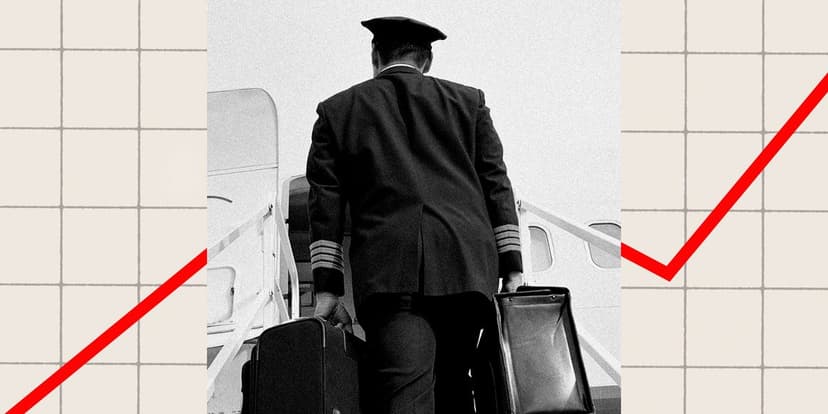
The aviation industry has witnessed a notable increase in pilots engaging in financial markets, particularly since 2020. This trend is driven by a desire for financial freedom and alternative income streams, especially after the pandemic exposed the fragility of the travel sector. Pilots often have lucrative salaries and significant downtime, creating a conducive environment for side hustles like trading.
This shift is statistically supported, with a rise in pilots pursuing side hustles unrelated to aviation, and a near doubling of those with finance-related side businesses over two decades. Financial professionals observe a surge in pilot clients actively participating in short-term trading.
Factors contributing to this include pilots' substantial savings, a consequence of rising salaries, and the FAA-mandated limits on flight hours, granting them considerable free time. Their independent nature and tendency to prepare for worst-case scenarios also align well with market trading. Many pilots view trading as a path to self-sufficiency, allowing them to secure their families' financial futures.
While some pilots manage to trade effectively between flights, experienced traders caution that overconfidence, common in the profession, can hinder market success. Despite these challenges, the pursuit of financial independence through trading remains a significant draw for pilots.