Home / Business and Economy / Crude Oil Above $100: Your Guide to Market Swings
Crude Oil Above $100: Your Guide to Market Swings
24 Mar
Summary
- Oil is trading at $102.47 per barrel, up from yesterday and significantly higher year-over-year.
- Refineries, wholesalers, taxes, and gas station markups all affect your pump price.
- The U.S. Strategic Petroleum Reserve offers a backup supply for energy security crises.
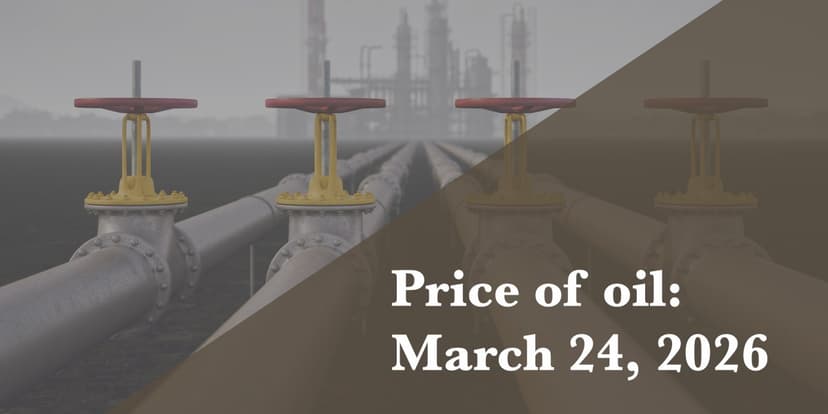
As of 8:15 a.m. Eastern Time on March 24, 2026, oil is trading at $102.47 per barrel, marking a $1.03 increase from the previous day and a substantial $29.44 rise compared to a year ago.
Several factors influence oil prices, with supply and demand remaining central. Geopolitical events like wars or economic concerns such as recessions can rapidly shift market dynamics.
The cost of gasoline at the pump reflects numerous stages of the supply chain, including refining, wholesale distribution, taxes, and retail markups. Crude oil itself constitutes over half of the final price per gallon.
When oil prices climb, gasoline prices typically follow suit, though gas prices may decrease more slowly when oil costs fall, a phenomenon sometimes referred to as "rockets and feathers."
The United States maintains the Strategic Petroleum Reserve, a backup crude oil supply primarily intended to ensure energy security during critical events like sanctions, natural disasters, or conflicts, and to buffer against price spikes.
This reserve offers immediate relief to consumers and supports the continuity of essential economic functions, rather than addressing long-term energy challenges.
Fluctuations in oil prices can indirectly impact natural gas, as industries may switch between the two for operational segments, potentially increasing demand for natural gas when oil prices rise.
Oil market performance is often tracked using benchmarks like Brent, which offers a more representative view of global crude oil pricing and historical trends.
Historically, oil prices have been volatile, experiencing sharp increases during wartime and supply restrictions, alongside significant decreases during global recessions or periods of oversupply.