Home / Business and Economy / Micron Soars on AI Demand: Record Revenue Predicted
Micron Soars on AI Demand: Record Revenue Predicted
19 Mar
Summary
- Micron forecasts $33.5 billion in current quarter revenue, beating analyst estimates.
- Soaring memory prices, driven by AI computing demand, bolster Micron's prospects.
- Company shares have risen 62% this year heading into the report.

Micron Technology Inc., the largest US manufacturer of computer memory chips, has provided an optimistic outlook for the current quarter, anticipating revenue of approximately $33.5 billion. This projection substantially surpasses the $23.7 billion estimated by analysts, reflecting the significant impact of surging component prices on the company's performance. The dramatic increase in memory prices is directly linked to shortages exacerbated by the escalating demands of AI computing.
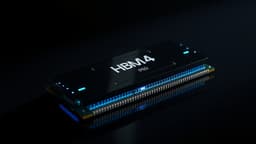
High-bandwidth memory (HBM) is a critical component for the powerful chips used in training and operating AI models. Consequently, memory manufacturers are prioritizing these higher-margin HBM orders, which has led to reduced supply and price hikes for other memory types. In the fiscal second quarter, which concluded on February 26, Micron's sales nearly tripled to $23.9 billion, with earnings climbing to $12.20 per share, also outperforming analyst predictions.
The company, alongside other memory chip producers like Samsung Electronics Co. and SK Hynix Inc., has benefited from extensive data center construction. Demand in this sector is expected to remain strong for years. However, these memory shortages present challenges for the broader tech industry and consumers, leading to increased prices and reduced shipments of smartphones and computers. HP Inc., for example, reported that memory prices have roughly doubled in the current quarter compared to the previous one.
Micron is actively working to increase production of its new HBM4 memory. A key factor for its future success will be the extent to which Nvidia Corp., a dominant maker of AI accelerators, integrates Micron's components. Any decision by Nvidia to limit its reliance on Micron for its new Vera Rubin line could significantly impact the company. Despite these considerations, Micron shares have seen substantial gains, rising 62% year-to-date prior to this report.