Home / Business and Economy / Kuwait's Growth Fuels Emissions: Innovation the Only Hope?
Kuwait's Growth Fuels Emissions: Innovation the Only Hope?
23 Jan
Summary
- Kuwait's economy relies heavily on hydrocarbons, leading to high emissions.
- Technological innovation is crucial for decoupling growth from environmental damage.
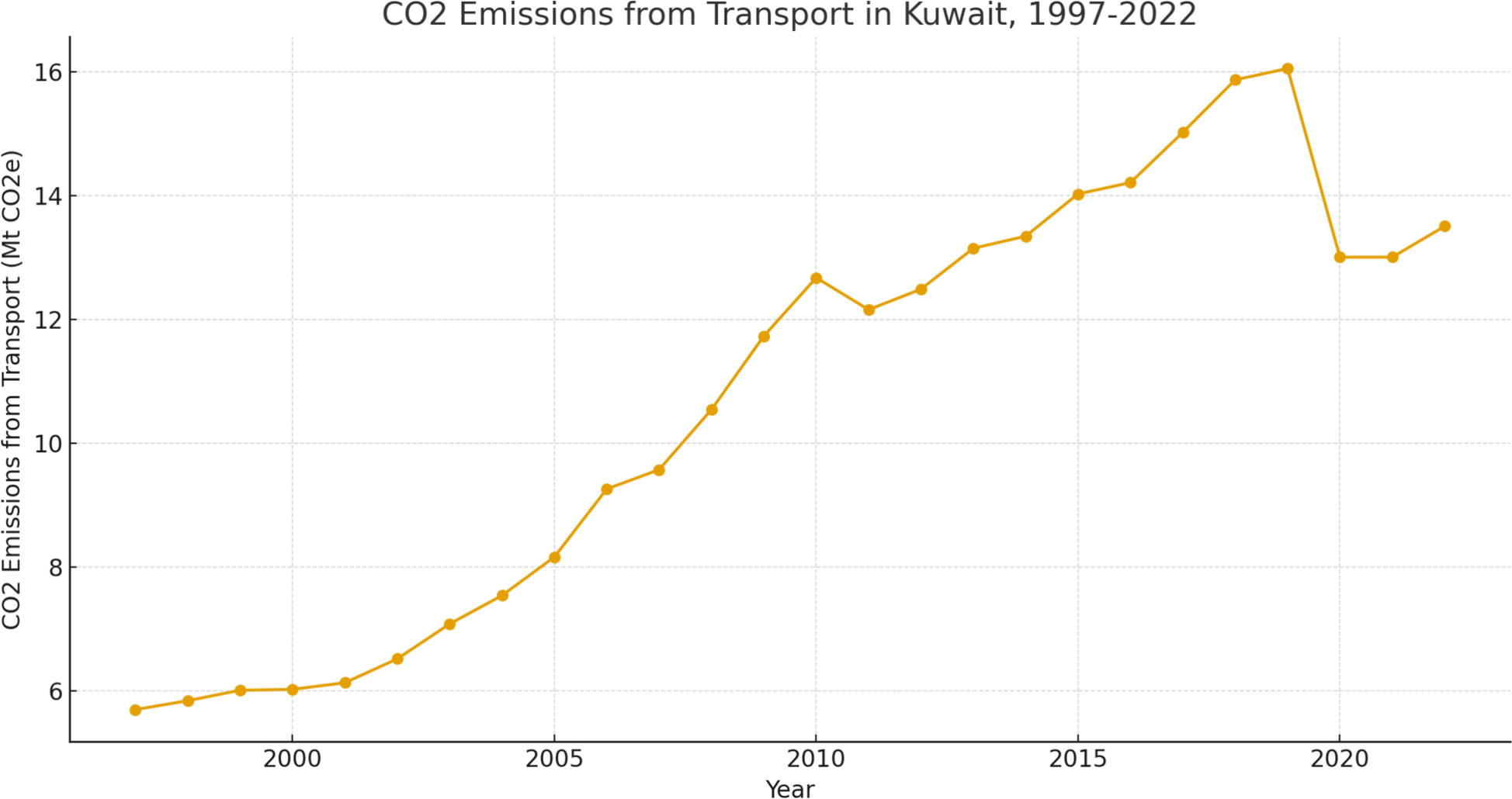
- Transport sector emissions are a primary source of CO2 growth in Kuwait.
Kuwait's economic prosperity, largely derived from its extensive hydrocarbon resources, has resulted in high living standards and fiscal stability. However, this growth model has also intensified environmental challenges, making Kuwait one of the world's leading emitters on a per capita basis. Rapid industrialization and escalating energy demands have directly correlated economic progress with increased carbon emissions.
The nation faces a critical juncture as global efforts toward carbon neutrality gain momentum. Kuwait's continued economic expansion hinges on adopting cleaner production and energy technologies. Technological innovation is posited as a key strategy to sever the link between output growth and emissions, especially in the transport sector which contributes significantly to CO2 increases.
Analysis of recent decades shows a consistent rise in greenhouse gas emissions alongside economic output, reflecting increased energy consumption. This pattern underscores a carbon-dependent growth trajectory, where economic contractions have led to temporary emission reductions, but not a structural decoupling.
To achieve sustainability, Kuwait must invest in research and development, embrace renewable energy systems, and adopt lower-emission transport and industrial practices. Such a shift, while challenging, offers a viable path to environmental sustainability without halting economic activity, providing valuable insights for other resource-dependent economies.