Home / Business and Economy / Kenya's Green Cooking Dream Goes Cold
Kenya's Green Cooking Dream Goes Cold
6 Feb
Summary
- Over 3,000 Koko fuel points sit idle after abrupt shutdown.
- Koko Networks enabled cleaner cooking for over 1.5 million Kenyan homes.
- The company cited a lack of government authorization for carbon credits.
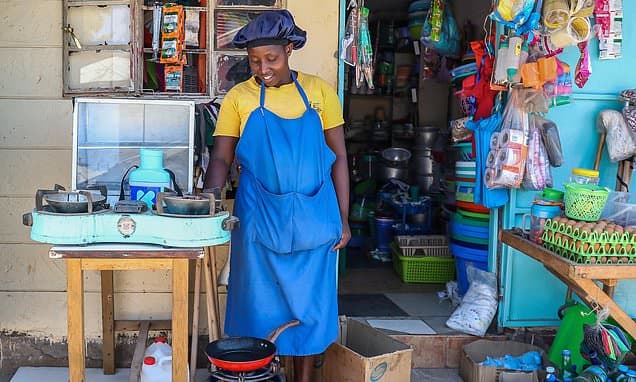
Koko Networks, a company that championed cleaner household energy in Kenya, has ceased operations, leaving thousands of its fuel supply points non-operational. For over a decade, Koko provided bioethanol fuel, enabling more than 1.5 million Kenyan homes to transition away from charcoal stoves. This initiative was once hailed as a significant stride in Africa's green transition.
The company's sudden closure on January 30, 2026, stems from an inability to obtain government authorization for carbon credits. These credits are vital for Koko's financial model, as they unlock international funding that keeps fuel prices affordable. Without these permits, Koko declared its business model financially unsustainable.
The shutdown has left over 3,000 Koko fuel points inactive, impacting numerous households who relied on the affordable bioethanol. Many customers, like Fredrick Onchenge and Grace Kathambi, have lost their livelihoods or now face difficult choices, including returning to charcoal or affording more expensive alternatives like liquefied petroleum gas.
Kenyan authorities cited broader concerns regarding the credibility of carbon credits and regulatory frameworks. David Ndii, Kenya's presidential advisor on economic affairs, indicated that government intervention was unlikely, likening the situation to a doctor losing a patient, suggesting complex issues beyond simple solutions.
Energy analysts suggest this event exposes significant weaknesses in financing clean cooking solutions across Africa. Experts emphasize that models heavily dependent on carbon credits may prioritize markets over people, urging a shift towards more sustainable solutions like electricity powered by renewable energy, rather than relying on carbon market mechanisms.