Home / Business and Economy / Pulses Stockpile Hits Record High: India's Price Shield
Pulses Stockpile Hits Record High: India's Price Shield
20 Sep
Summary
- Record 4.5 million tonne pulses buffer stock built by government.
- Pulses strategic reserve procured from farmers and via imports.
- Buffer stock aims to curb price rises amid climate concerns.
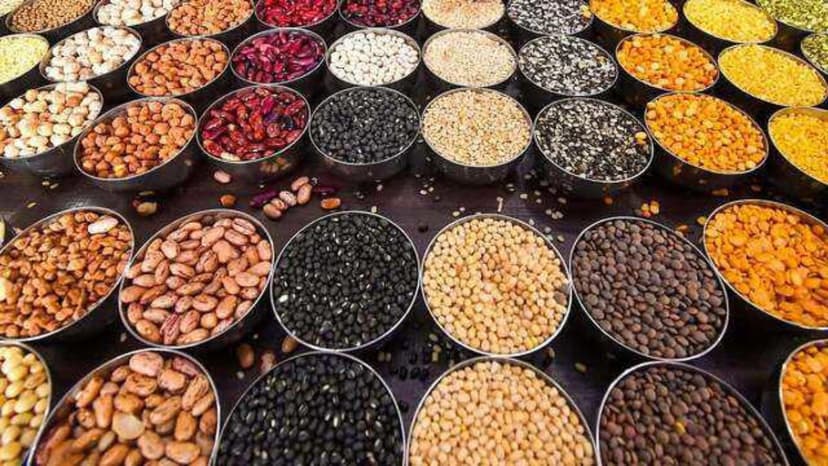
India's government has achieved a record buffer stock of pulses, reaching 4.5 million tonnes. This substantial reserve exceeds the standard buffer norm of 3.5 million tonnes and is strategically built to mitigate potential price increases due to any shortfalls in the kharif output or the upcoming rabi winter crop.
The strategic reserve primarily consists of gram (1.95 MT), tur (1 MT), moong (0.88 MT), and masur (0.56 MT). These stocks are intended for a calibrated release into the market to prevent price spikes. They are typically distributed through open market sales and supplied to states for welfare programs, including PM-Poshan, ICDS, and PDS.
A decision on market intervention will be made after a clearer picture emerges regarding the impact of El Nino on both kharif and rabi crops. While kharif crop prospects are being monitored due to rainfall deficits in Karnataka and Maharashtra, acreage for kharif pulses has seen a slight year-on-year decrease.
Recent retail inflation for pulses was 3.61% in August 2025, and average retail prices for tur, gram, and urad have increased compared to the previous year. To support domestic supply, India has extended duty-free import policies for tur and urad until March 31, 2027, and maintained duties on yellow peas and lentils.
India imports approximately 18%-20% of its annual pulse consumption from countries like Canada, Russia, Brazil, Myanmar, and Africa. Concerns over storage duration have led to a request to potentially relax the norm requiring disposal of Price Support Scheme (PSS) stocks within nine months, to preserve reserves until production outlooks are clearer.


