

Home / Business and Economy / India's Ports Transform: From Cargo Hubs to Logistics Powerhouses
India's Ports Transform: From Cargo Hubs to Logistics Powerhouses
22 Apr
Summary
- Cargo handling capacity has doubled, targeting 3,500 MTPA by 2030.
- India aims to be among the top five global shipbuilding nations by 2047.
- Green hydrogen hubs are being developed at Kandla, Paradip, and Tuticorin.
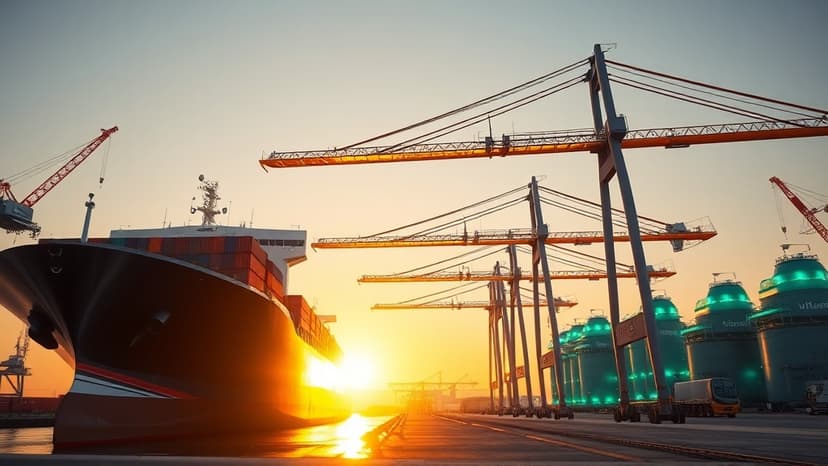
India is undergoing a significant maritime industrial transformation, evolving its ports into advanced logistics and industrial hubs. Secretary Vijay Kumar announced that cargo handling capacity has doubled to 2,771 MTPA and is projected to reach 3,500 MTPA by 2030. This expansion is crucial for sustaining growth and integrating into global value chains.
The nation is also setting its sights on becoming a global shipbuilding powerhouse. With a comprehensive vessel acquisition plan worth approximately Rs 2.2 lakh crore over 15 years, India aims to join the top five shipbuilding nations by 2047. Initiatives like the Shipbuilding Financial Assistance Scheme and the Maritime Development Fund are bolstering this ambition.
Sustainability is a core focus, with plans to develop Kandla, Paradip, and Tuticorin ports as green hydrogen hubs. This aligns India's maritime growth with global climate commitments, attracting major industry partners for green energy production facilities.

