Home / Business and Economy / India's Waste to Wealth: Crop Residue Fuels Green Industry
India's Waste to Wealth: Crop Residue Fuels Green Industry
15 Dec, 2025
Summary
- India produces over 500 million tonnes of agricultural residue annually.
- Residue-based fibers offer a 70% lower carbon footprint than wood.
- Market coordination, not resource scarcity, limits residue utilization.
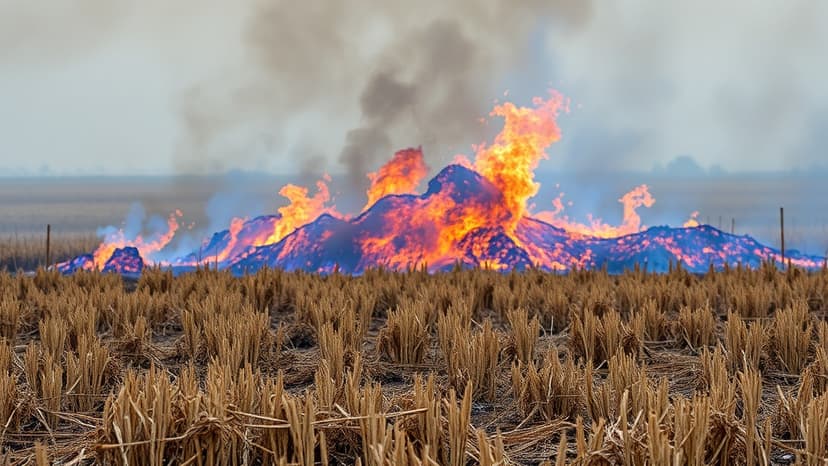
India possesses a significant opportunity to transform its agricultural residue, estimated at over 500 million tonnes annually, into a valuable industrial feedstock. Instead of being discarded or burned, this biomass can be converted into pulp, paper, textiles, and advanced bio-materials. Utilizing crop residues offers a strategic advantage, providing materials with a lower carbon footprint compared to traditional wood-based sources.
This shift is driven by global demand for sustainable and resilient supply chains, with major brands already committing to forest-safe fibers. The core challenge in India is not the availability of raw material but the market design needed to aggregate and process this biomass efficiently. Overcoming fragmented aggregation, high transportation costs, and limited processing capacity is crucial.