Home / Business and Economy / India's Roads: More Parking Than Gallop?
India's Roads: More Parking Than Gallop?
13 Jul
Summary
- Commute times in Indian cities like Bengaluru stretch for hours.
- Traffic congestion costs Indian cities Rs 1.47 lakh crore annually.
- Cities like Singapore and Tokyo offer public transport as efficient alternatives.
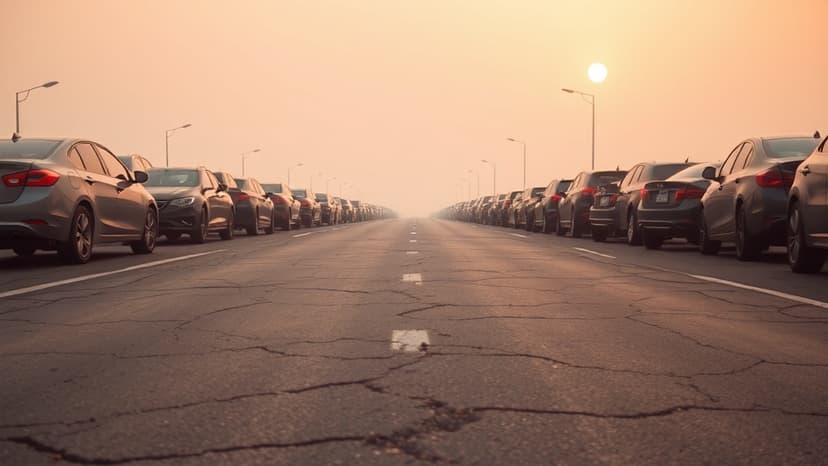
Traffic congestion in Indian cities has reached a critical point, with daily commutes turning into lengthy ordeals. Journeys of just a few kilometers can take over an hour, leading to widespread frustration among commuters. This chronic gridlock results in substantial economic losses, costing Indian cities an estimated Rs 1.47 lakh crore per year from lost productivity, wasted fuel, and increased logistics expenses.
The current situation highlights a disconnect between automotive advertising and real-world driving conditions. While cars are marketed with impressive acceleration figures, they often spend most of their operational life stationary in bumper-to-bumper traffic. This constant stop-and-go contributes to increased wear and tear on vehicles and diminishes fuel efficiency.
Cities like Singapore and Tokyo offer contrasting models, prioritizing efficient public transportation systems. In these cities, owning a car is deliberately made expensive, encouraging citizens to rely on reliable public transit. This approach balances ownership costs with robust public transport, effectively managing traffic flow and reducing road congestion.
Addressing India's traffic problem requires a multi-faceted approach beyond simply building more roads. Solutions include smarter traffic management, enhanced public transportation, integrated last-mile connectivity, synchronized traffic signals, and urban planning that minimizes unnecessary travel. Technological advancements like AI-powered traffic systems and dynamic signal timing can also significantly improve traffic flow.


