Home / Business and Economy / India's Rice Dominance: A Double-Edged Sword
India's Rice Dominance: A Double-Edged Sword
2 Feb
Summary
- India leads global rice production, exporting 40% of trade.
- Rice cultivation strains India's groundwater resources.
- India aims to balance production with ecological sustainability.
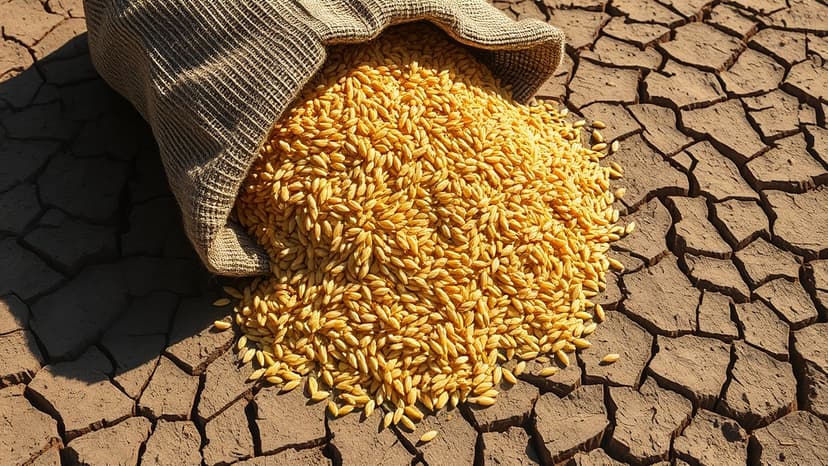
India has become the world's largest rice producer, accounting for 28% of global production and 40% of trade in 2024-2025. This position highlights historical cultivation, with origins potentially dating back to the Indus Valley Civilization, and a vast array of local varieties.
Despite its leading role, India faces significant environmental hurdles. The cultivation of rice, a water-intensive crop, heavily relies on groundwater, leading to over-extraction in many key growing regions. This ecological stress has prompted government interventions aimed at crop diversification and sustainable practices.
To address these challenges, India has implemented various policies, including the National Food Security Act, 2013, and initiatives like rice fortification with essential nutrients. Efforts are also underway to promote less water-intensive crops and sustainable farming techniques.