feedzop-word-mark-logo
searchLogin
Feedzop
homeFor YouIndiaIndia
You
bookmarksYour BookmarkshashtagYour Topics
Trending
Terms of UsePrivacy PolicyAboutJobsPartner With Us

© 2026 Advergame Technologies Pvt. Ltd. ("ATPL"). Gamezop ® & Quizzop ® are registered trademarks of ATPL.

Gamezop is a plug-and-play gaming platform that any app or website can integrate to bring casual gaming for its users. Gamezop also operates Quizzop, a quizzing platform, that digital products can add as a trivia section.

Over 5,000 products from more than 70 countries have integrated Gamezop and Quizzop. These include Amazon, Samsung Internet, Snap, Tata Play, AccuWeather, Paytm, Gulf News, and Branch.

Games and trivia increase user engagement significantly within all kinds of apps and websites, besides opening a new stream of advertising revenue. Gamezop and Quizzop take 30 minutes to integrate and can be used for free: both by the products integrating them and end users

Increase ad revenue and engagement on your app / website with games, quizzes, astrology, and cricket content. Visit: business.gamezop.com

Property Code: 5571

Home / Business and Economy / India's PCB Leap: Beyond Subsidies

India's PCB Leap: Beyond Subsidies

29 Nov, 2025

•

Summary

  • India imports nearly 88% of its Printed Circuit Board demand.
  • Government approves $664M for Electronics Components Manufacturing.
  • PCB market to reach $100-120 billion by 2030.
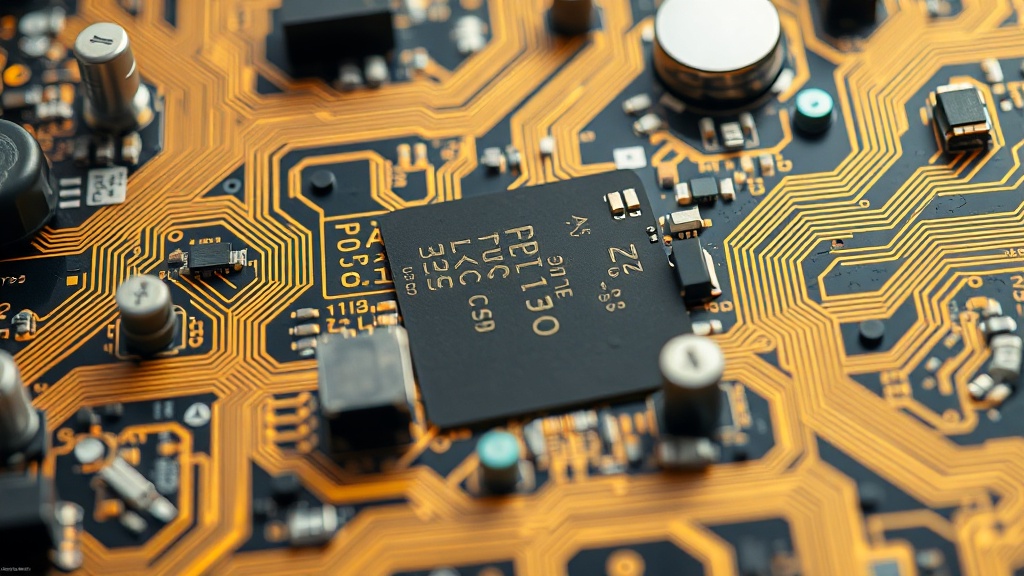
India's PCB Leap: Beyond Subsidies

India is making a significant pivot in its electronics strategy, aiming to manufacture high-value internal components rather than just assembling finished products. The recent approval of Rs 5,532 crore for the Electronics Components Manufacturing Scheme (ECMS) is a key step. However, the nation's Printed Circuit Board (PCB) sector faces a substantial challenge, importing approximately 88% of its $4.2 billion demand for FY24-25.

To achieve true electronics self-reliance, India must go beyond existing incentives like the PLI scheme. Critical areas needing intervention include reducing the cost of imported raw materials like copper foil and specialty chemicals, boosting investment in advanced PCB fabrication R&D, and developing a skilled workforce trained in precision manufacturing techniques.

Furthermore, a unified framework to coordinate central and state-level incentives is essential to streamline investment and operations. By addressing these capability gaps, India can build a robust PCB ecosystem and capture a significant share of the global market, projected to reach $100-120 billion by 2030, transforming itself into a hub for high-value electronic components.

Disclaimer: This story has been auto-aggregated and auto-summarised by a computer program. This story has not been edited or created by the Feedzop team.
India currently imports approximately 88% of its Printed Circuit Board (PCB) demand, which was valued at around $4.2 billion for FY24-25.
Key schemes include the Make in India initiative, electronics-focused Production Linked Incentive (PLI) schemes, SPECS, and the new Electronics Components Manufacturing Scheme (ECMS).
Challenges include high costs of imported raw materials, limited R&D in advanced fabrication, a shortage of skilled labor, and the need for better coordination between central and state government incentives.

Read more news on

Business and Economyside-arrow
trending

Jupiter brightest in 2026

trending

Man City overwhelms Exeter 10-1

trending

Booker dunks over Anunoby

trending

DMart Q3 profit jumps

trending

Harmanpreet Kaur stars in WPL

trending

Barcelona focuses on Real Madrid

trending

Du Plessis, James Vince shine

trending

Everton beat Sunderland in FA

trending

Sam Harper stars in BBL

You may also like

Acid-Free Steel Cleaning: A Global Leap

8 hours ago • 2 reads

article image

PEC & IOCL Forge Research Alliance

8 Jan • 11 reads

article image

ASML's $400M Machine: The AI Economy's Heartbeat

4 Jan • 66 reads

article image

PCB Market Surges: $75.85B in 2023 to $117.53B by 2032

6 Jan • 15 reads

article image

India's Chip Design Soars: DLI Scheme Fuels Innovation

5 Jan • 8 reads

article image