feedzop-word-mark-logo
searchLogin
Feedzop
homeFor YouIndiaIndia
You
bookmarksYour BookmarkshashtagYour Topics
Trending
Terms of UsePrivacy PolicyAboutJobsPartner With Us

© 2026 Advergame Technologies Pvt. Ltd. ("ATPL"). Gamezop ® & Quizzop ® are registered trademarks of ATPL.

Gamezop is a plug-and-play gaming platform that any app or website can integrate to bring casual gaming for its users. Gamezop also operates Quizzop, a quizzing platform, that digital products can add as a trivia section.

Over 5,000 products from more than 70 countries have integrated Gamezop and Quizzop. These include Amazon, Samsung Internet, Snap, Tata Play, AccuWeather, Paytm, Gulf News, and Branch.

Games and trivia increase user engagement significantly within all kinds of apps and websites, besides opening a new stream of advertising revenue. Gamezop and Quizzop take 30 minutes to integrate and can be used for free: both by the products integrating them and end users

Increase ad revenue and engagement on your app / website with games, quizzes, astrology, and cricket content. Visit: business.gamezop.com

Property Code: 5571

Home / Business and Economy / India Bets Big on Domestic Rare Earth Magnets for EVs

India Bets Big on Domestic Rare Earth Magnets for EVs

10 Feb

•

Summary

  • India approves ₹7,280 crore scheme for rare earth permanent magnets.
  • Sintered rare earth magnets are crucial for EVs, wind turbines, and defense.
  • Government offers customs duty exemption to boost critical minerals manufacturing.
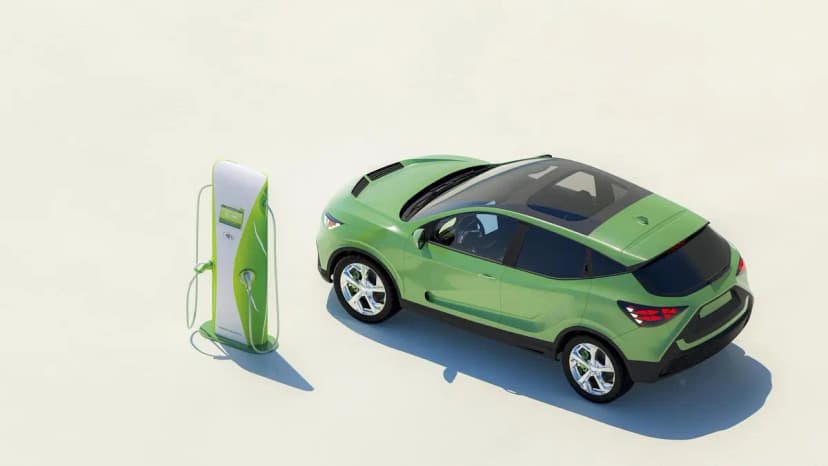
India Bets Big on Domestic Rare Earth Magnets for EVs

India is embarking on a significant push to indigenize the production of sintered rare earth permanent magnets, critical components for electric vehicles (EVs) and other advanced technologies. This strategic move aims to deepen the country's clean manufacturing ecosystem and reduce reliance on imports.

The Union Cabinet has greenlit the Rare Earth Permanent Magnets (REPM) scheme, backed by an outlay of ₹7,280 crore. This initiative is designed to bolster domestic capabilities in high-technology sectors crucial for clean energy and mobility.

Further supporting domestic manufacturing, recent budget measures include exemption from basic customs duty for capital goods used in critical minerals production. Industrial corridors are also being developed in Tamil Nadu, Kerala, Odisha, and Andhra Pradesh to foster integrated ecosystems for component manufacturing and downstream applications.

trending

India US trade tariffs slashed

trending

Salesforce lays off 1000

trending

Dhakshineswar Suresh Davis Cup hero

trending

CBSE board exams: key details

trending

US lowers Bangladesh tariffs

trending

iPhone 17 Croma Valentine's sale

trending

Herb may reverse hair loss

trending

Netherlands face prepared Namibia

trending

Jana Nayagan movie court case

India's electric mobility transition is accelerating, driven by policy support, budgetary allocations, and production-linked incentive schemes. EVs are seen as central to national priorities like cleaner growth, energy security, and industrial transformation, embodying the 'Make in India' and 'Atmanirbhar Bharat' vision.

The country's automotive industry, valued at approximately $50 billion, is among the world's fastest-growing. India's economy, currently the fourth-largest globally at $4.18 trillion, is projected to reach $7.3 trillion by 2030.

With a national objective of achieving net-zero emissions by 2070, electric mobility plays a pivotal role in reducing transport emissions, which account for a substantial portion of pollution, particularly from commercial vehicles.

The EV market in India has experienced remarkable growth, with a compound annual growth rate exceeding 60% over the past six years. In the 2024-25 financial year, EV registrations neared 2 million units, primarily driven by electric two-wheelers, while electric passenger vehicles surpassed 100,000 units.

To facilitate EV adoption, the Ministry of Heavy Industries has approved ₹2,000 crore under the PM E-Drive scheme for establishing over 70,000 charging stations nationwide. The Production Linked Incentive (PLI) scheme for automobiles and auto components, with an outlay of ₹25,938 crore, aims to enhance domestic value addition and global competitiveness.

Battery manufacturing is a cornerstone of India's energy security and competitiveness. The PLI scheme for Advanced Chemistry Cell batteries, totaling ₹18,000 crore, targets the creation of 50 gigawatt-hours of domestic capacity, aiming to position India as a global manufacturing hub for batteries.

NITI Aayog highlights electric mobility not just as an environmental necessity but also as a multi-billion-dollar economic opportunity, promising transformation through connected vehicles and new mobility models. India's vision is to transition from adoption to leadership, building resilient industries and sustainable livelihoods through collaboration.

Disclaimer: This story has been auto-aggregated and auto-summarised by a computer program. This story has not been edited or created by the Feedzop team.
India's REPM scheme is a strategic initiative with a ₹7,280 crore outlay approved by the Union Cabinet to promote indigenous manufacturing of sintered rare earth permanent magnets.
The focus is to reduce import dependence, strengthen domestic capabilities in high-technology sectors, and support the growth of electric mobility, wind turbines, and defense systems.
The government is offering exemption from basic customs duty on capital goods used for critical minerals manufacturing and has approved ₹2,000 crore for setting up over 70,000 charging stations nationwide.

Read more news on

Indiaside-arrowBusiness and Economyside-arrow

You may also like

India's Green Energy Push: Budget Boosts Storage & Solar

1 Feb • 63 reads

article image

EV Dream Fuels: Budget Boosts Battery Production

1 Feb • 38 reads

article image

India's $30T Goal: Manufacturing is Key

1 Feb • 83 reads

article image

SBI Fuels India's Future: Rs 22L Cr for Sunrise Sectors

31 Jan • 85 reads

article image

ABB CEO: India to be 3rd largest market before 2030

21 Jan • 125 reads

article image