Home / Business and Economy / War Clause: 'Force Majeure' Now a Contract Lifeline
War Clause: 'Force Majeure' Now a Contract Lifeline
7 Mar
Summary
- Force majeure is a contract clause for unforeseen events.
- Companies invoke it to avoid penalties for missed deliveries.
- Legal battles may hinge on contract language and jurisdiction.

The recent conflict in the Middle East has brought the legal concept of "force majeure" to the forefront. This clause, found in many contracts, acts as an "act of God" provision, absolving parties from responsibility for obligations unmet due to uncontrollable, unforeseen circumstances.
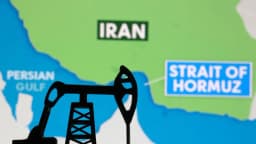
Companies operating in the region, such as QatarEnergy and Aluminium Bahrain, have recently invoked force majeure. This allows them to avoid penalties for failing to meet contracted deliveries of natural gas and aluminum, citing risks associated with shipping through the vital Strait of Hormuz.
French for "superior force," this clause typically covers external events that make contract fulfillment impossible. Common examples include natural disasters, war, political unrest, and pandemics. Whether a party can successfully invoke force majeure often depends on the precise language within the contract and the governing law, with disputes frequently being settled in courts in London or New York.
Even without a specific force majeure clause, some legal systems offer relief. For instance, in California, performance may be excused if prevented by "irresistible, superhuman cause" or "act of public enemies." Contracts can also be terminated if their purpose is fundamentally frustrated by an unforeseen event, as demonstrated in a historic English court ruling.