
Home / Business and Economy / Ferrari's EV gamble: A radical departure for a supercar icon?
Ferrari's EV gamble: A radical departure for a supercar icon?
31 May
Summary
- Carmakers like Porsche and Ford also reduced EV plans.
- China's EV market has vast supply chains, lowering costs.
- Ferrari's new Luce targets younger, EV-open buyers.
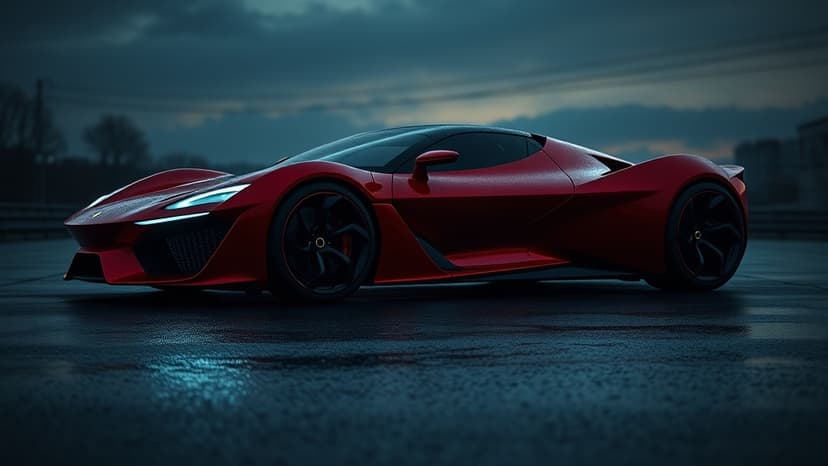
Global carmakers are grappling with the competitive electric vehicle (EV) landscape. Companies such as Porsche, Honda, and Ford have notably scaled back their EV initiatives. China presents a significant challenge, especially for luxury brands, as consumers there demand low prices, long battery ranges, and innovative features.
China's extensive EV parts supply chains offer a production cost advantage of at least 30% globally. Aggressive government subsidies have fueled a surge in carmakers, intensifying price wars and compelling firms to innovate. This fierce competition has pressured Western companies, including Tesla and VW, to reduce prices in the Chinese market.
Chinese EV manufacturers are increasingly focusing on the premium sector to improve profit margins, directly competing with high-end models from Porsche and Tesla. Even firms typically known for SUVs and saloons are introducing electric supercars, such as the $250,000 BYD Yangwang U9, capable of rapid acceleration.
Ferrari's new model, the Luce, appears to be targeting a different market segment than traditional supercar buyers. Analysts suggest the Luce may appeal to younger consumers who are more receptive to EVs than Ferrari's long-standing clientele.
The Luce's unfamiliar design could attract new demographics to the Ferrari brand. However, some suggest Ferrari might have benefited from testing such a radical design with loyal customers first. Nevertheless, the significant media attention generated by the Luce might have been an intentional strategy.
