

Home / Business and Economy / EU Eyes €65bn Fund for Disaster Insurance Gap
EU Eyes €65bn Fund for Disaster Insurance Gap
9 Apr
Summary
- EU regulators propose a €10bn to €65bn pool for disaster insurance.
- The pool aims to cover underinsured natural catastrophes like floods and wildfires.
- Europe faces growing climate risks with insufficient insurance coverage.
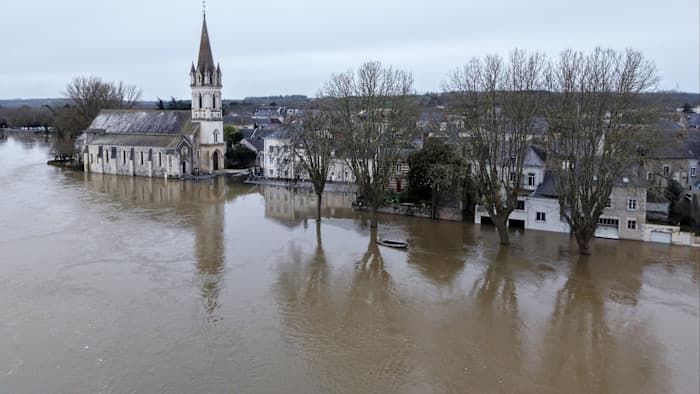
European regulators are proposing the establishment of a substantial risk-sharing mechanism, estimated between €10bn and €65bn, to address the growing insurance gap for natural catastrophes. This initiative is driven by the increasing frequency and severity of events such as floods, earthquakes, heatwaves, wildfires, and storms, which have resulted in significant uninsured losses across the continent. Recent events, like the Valencia floods with less than half of its €11bn losses insured, and the Ahr valley floods in 2021 where only €13bn of €51bn losses were covered, highlight the urgent need for enhanced protection.
Europe's status as the fastest-warming continent exacerbates these risks. Regulators suggest that an EU-wide pool could utilize the bloc's strong credit rating to secure more affordable funding in debt markets. This backstop would enable insurers to underwrite more business related to natural catastrophes, reducing the financial burden on policyholders and governments. Countries like Italy, Greece, and Bulgaria currently exhibit the largest insurance protection gaps, while earthquakes pose the most significant risk with the lowest insurance penetration.
This proposed EU vehicle would complement existing national reinsurance schemes, such as those in Spain, France, and Romania. By pooling risks across countries and various perils, the capital required could be reduced by up to 67 percent. The scheme is designed to be fiscally neutral for the EU, providing loans rather than grants to the financing pool if its collected premiums prove insufficient to cover claims. Projections indicate that the funding capacity of this backstop facility may need to expand over time, given the current dynamics of climate change.
