Home / Business and Economy / Car Payments Stable Despite Rising Costs?
Car Payments Stable Despite Rising Costs?
9 May
Summary
- Car payment-to-income ratio remains flat at 10% since 2019.
- Most car buyers finance with payment-to-income below 15%.
- Longer loans increase negative equity for trade-ins.
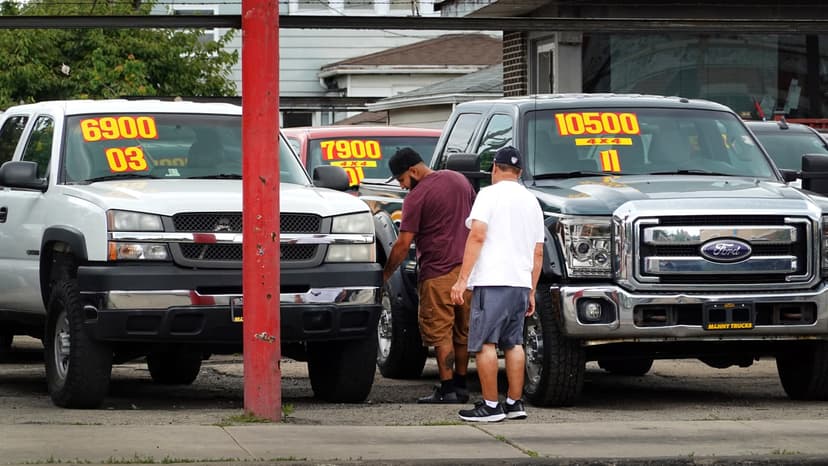
Consumer spending on vehicles as a percentage of income has remained stable since 2019, according to Capital One Auto President Sanjiv Yajnik. Despite increases in car prices, interest rates, and insurance costs, the payment-to-income ratio has held steady at approximately 10%. This suggests consumers are managing their vehicle expenses responsibly.
More than 80% of financed vehicle purchasers are operating below the widely recognized 15% payment-to-income threshold. This cautious approach prioritizes essential transportation costs. However, to maintain affordable monthly payments, consumers are increasingly opting for longer loan terms, extending to six years or more.
These extended loan durations, sometimes called 'forever loans,' lead to a slower payoff of the vehicle's balance. Consequently, a significant percentage of used vehicle trade-ins, around 26% as of April, involve negative equity, with an average shortfall of $5,105. For new vehicles, 90.2% of loans with negative equity trades in the first quarter had terms of at least 72 months.


