Home / Business and Economy / World's Largest Plant Turns Juice Effluent to Biogas
World's Largest Plant Turns Juice Effluent to Biogas
25 Aug
Summary
- Brazil is building the world's largest plant for biogas from citrus wastewater.
- The facility will process 400 cubic meters of effluent hourly.
- Biogas produced will cut carbon emissions by over 20%.
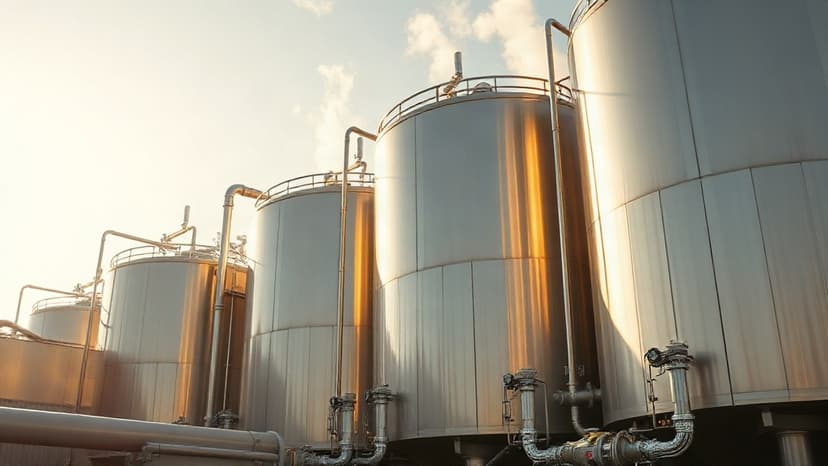
Louis Dreyfus Company (LDC) is constructing a groundbreaking facility in Bebedouro, São Paulo, Brazil, designed to convert citrus wastewater into renewable energy. This plant, described as the world's largest of its kind, will process approximately 400 cubic meters of citrus effluent every hour.
The biotechnology-driven process breaks down organic materials in the wastewater using a specialized inoculum. This method transforms a significant waste stream into a valuable energy source, producing over 50,000 normal cubic meters of biogas daily. LDC's pilot project research exceeded targets by 15%, paving the way for this large-scale operation.
This renewable biogas will be utilized within LDC's industrial operations, replacing fossil fuels. The company anticipates this will lead to a reduction in carbon dioxide emissions from the facility by more than 20%. Construction was expected to be completed by mid-2026.
Beyond energy generation, the project ensures 100% of treated water is returned to water resources. This dual approach addresses both organic waste treatment and responsible water management, aligning with LDC's broader goals for supply-chain decarbonisation and efficient resource use.
The Bebedouro plant, covering about 195,000 square metres, represents a significant shift in how agricultural waste is managed. It offers a potential model for other food processing industries seeking to create circular systems where by-products become renewable energy sources.


