Home / Business and Economy / Belgian Court Overturns Russian Bank Asset Freeze
Belgian Court Overturns Russian Bank Asset Freeze
16 Sep
Summary
- Belgium's highest court ruled government improperly handled frozen BCS Bank assets.
- Court found a legal vacuum created by unclear delegation of powers.
- Ruling allows bank to seek review, setting precedent for similar cases.
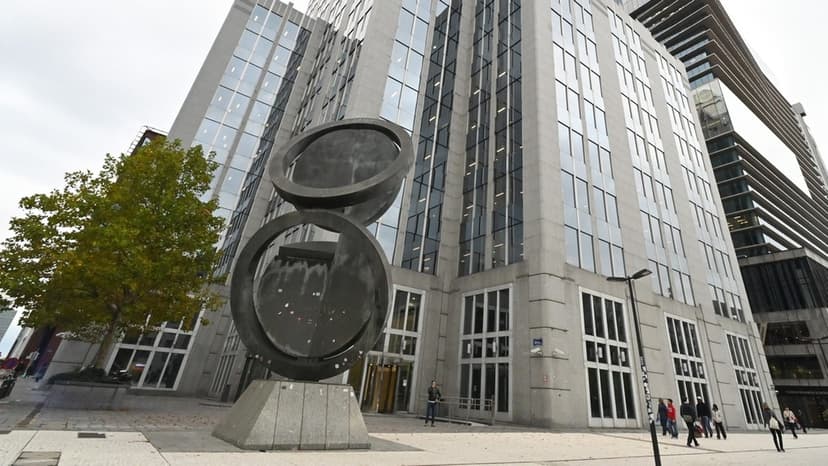
Belgium's Council of State, the nation's highest administrative court, has invalidated a government decision that prevented the release of frozen assets belonging to Russia's BCS Bank. The court determined that Belgian authorities mishandled the request by failing to establish a clear procedure and by delegating authority to an agency lacking the legal standing to process such applications.
In February 2022, as part of EU sanctions following Russia's escalation in Ukraine, BCS Bank's funds were frozen because they were held via Russia's National Settlement Depository with Euroclear. The bank applied in January 2023 for the release of its funds, but the Treasury rejected the request in July 2024, citing concerns over the termination of the relationship with NSD and monitoring difficulties.
The Council of State ruled that the Ministry of Finance improperly delegated its powers, creating a "legal vacuum" with "excessively broad and unclear" authority granted to the Office of the Administrator General of the Treasury. This action violated Belgium's constitution, invalidating the 2024 decision. The ruling does not automatically unfreeze the assets but permits BCS Bank to seek a review and may set a precedent for other Russian entities whose requests were similarly denied.
The court also dismissed Belgium's argument that BCS Bank, sanctioned by the US in 2024 and the EU in May 2026, had lost its right to appeal. It specifically noted that Belgian authorities cannot assume U.S. sanctions will remain in place indefinitely. The exact number of Russian companies affected by the EU asset freeze remains unclear due to client confidentiality at Euroclear and a lack of public information from Russian authorities.


