Home / Business and Economy / AI's Metal Heartbeat: Building Blocks for the Future
AI's Metal Heartbeat: Building Blocks for the Future
14 Nov
Summary
- AI data centers require significantly more metals than traditional facilities.
- Gallium, germanium, and tin are crucial for AI semiconductors.
- Grid connection delays and public backlash pose challenges to AI build-out.
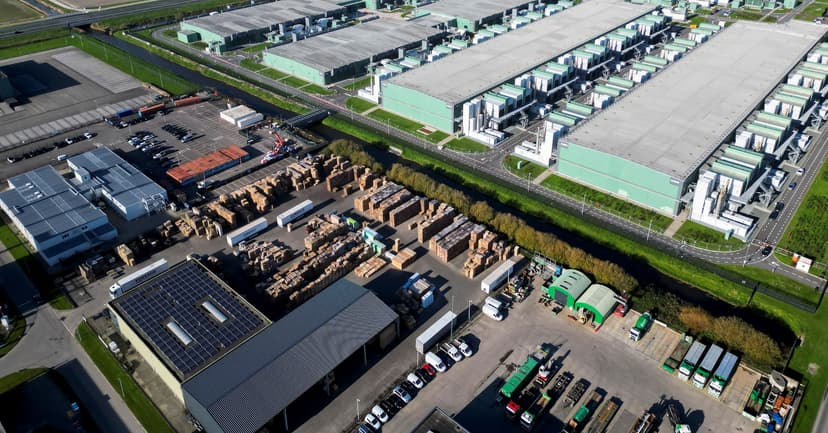
The physical infrastructure underpinning artificial intelligence, particularly its data centers, demands a vast array of metals. These facilities are considerably more metals-intensive than their traditional counterparts, consuming large volumes of materials for construction, computing hardware, and power systems. Metals like gallium and germanium are vital for semiconductor performance, with China being a dominant producer and exporter.
Tin plays a critical role in soldering circuit boards, essential for the complex architecture of AI data centers. Copper, while significant, may see reduced usage as designs improve. The overall demand for metals is amplified when considering the energy infrastructure required to power these facilities, including transmission lines and renewable energy sources.
The projected growth of AI data centers faces potential limitations. Concerns exist regarding the accuracy of investment figures, with some announced capacities described as "bragawatts." A major bottleneck is grid connectivity, with lengthy waiting times for connections, and growing public and political backlash against data center development, particularly in the US and Europe.
Government policies and public opinion will significantly influence the pace of AI infrastructure development, drawing parallels to the evolution of the electric vehicle market. Furthermore, the expansion of embodied AI—robots that can interact with the physical world—will further increase the demand for metals, extending beyond digital infrastructure into real-world applications.


