

Home / Business and Economy / Air India CEO Resigns Amidst Turbulence
Air India CEO Resigns Amidst Turbulence
7 Apr
Summary
- Air India CEO Campbell Wilson has resigned, staying until a successor is found.
- Airline faces disruptions, rising costs, and a potential record loss.
- Successor search is underway, with candidates being CEOs of full-service carriers.
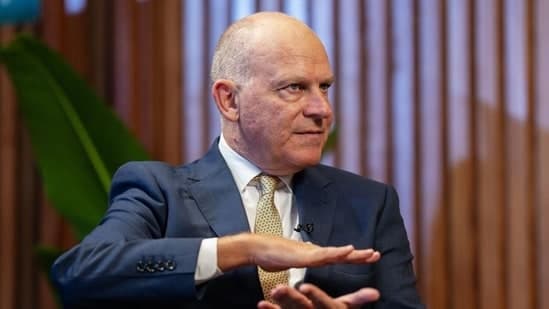
Campbell Wilson, the CEO of Air India, has resigned from his position. He has agreed to remain with the company until a suitable successor is identified and onboarded, with his tenure potentially extending until September. This leadership change comes at a critical juncture for the airline, which is currently navigating a complex operational environment.
Air India is contending with numerous challenges, including the impact of West Asia airspace restrictions, ongoing aircraft supply limitations, and increasing operational expenses. These factors are particularly affecting international routes, which form a substantial portion of the airline's network, forcing longer flight paths and increased fuel consumption.
The airline is reportedly in advanced discussions to find a replacement CEO, with meetings scheduled for the upcoming week. Candidates under consideration are noted to be CEOs from other full-service carriers. The search began in January after Wilson indicated his desire not to continue his contract beyond its initial five-year term.
Furthermore, reports indicate that Air India might be facing a substantial financial setback, with estimated losses reaching up to ₹20,000 crore for the fiscal year 2026. The airline's situation is further complicated by the preliminary report on the June 12, 2025, crash of Flight AI 171, which is expected to be publicly released by June 12, 2026.
This leadership transition at Air India mirrors recent changes in the Indian aviation sector, including IndiGo's appointment of a new CEO. The industry suggests the ideal candidate for Air India should possess strong credibility, extensive global experience with complex carriers, and familiarity with low-cost operations.
