Home / Business and Economy / Recent Grads Struggle: AI or Remote Work to Blame?
Recent Grads Struggle: AI or Remote Work to Blame?
18 Aug
Summary
- Unemployment for recent graduates is higher than for all workers.
- Economists debate if AI or remote work impacts entry-level hiring.
- Some studies suggest companies investing in AI are hiring more.
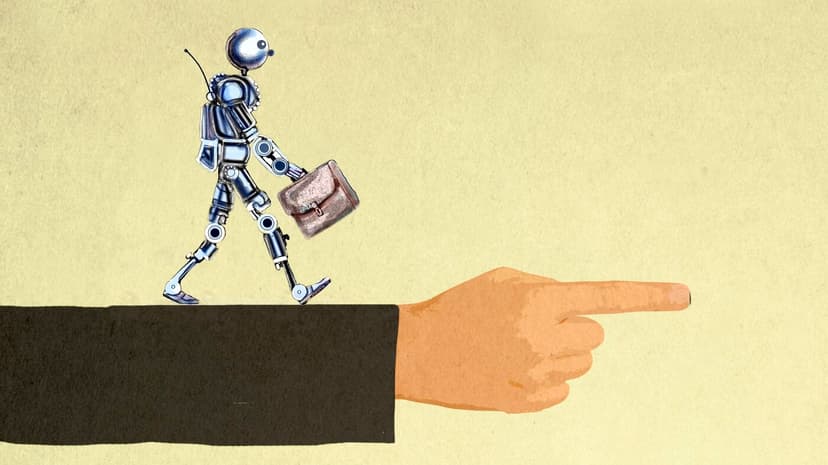
Recent graduates are encountering significant difficulties in securing employment, with unemployment rates for this demographic exceeding those of the broader workforce as of June. Economists are debating the underlying causes for this trend.
Some experts, like Erik Brynjolfsson, suggest that AI is contributing to a decline in early-career employment in AI-exposed fields since late 2022. He notes that junior roles are often the first affected during economic contractions and that AI models trained on codified knowledge overlap with entry-level skill sets.
Conversely, David Deming argues that the decline in junior hiring may have begun before AI's widespread adoption, suggesting remote work is a more significant factor. His analysis indicates companies are less likely to hire recent graduates for remote positions due to training challenges.
Further complicating the narrative, Anders Humlum points to studies showing that companies with substantial AI investments have, paradoxically, increased entry-level hiring. This suggests AI's impact may not be a simple replacement of junior roles.
Economists acknowledge a major employment shift is underway, with AI potentially causing widespread disruption, akin to the Industrial Revolution. However, many remain optimistic that AI will ultimately be a force for good, though the transition is expected to be turbulent.


