Home / Arts and Entertainment / Film Captures Life's Fleeting, Mundane Moments
Film Captures Life's Fleeting, Mundane Moments
6 Feb
Summary
- Director Clint Bentley's film adaptation focuses on ordinary logger Robert Grainier.
- The film explores how significant life moments are often mundane.
- Narrative structure mimics slipping through time, not plot-driven.
- Memory's changing nature is key, with sweeter versions recalled.
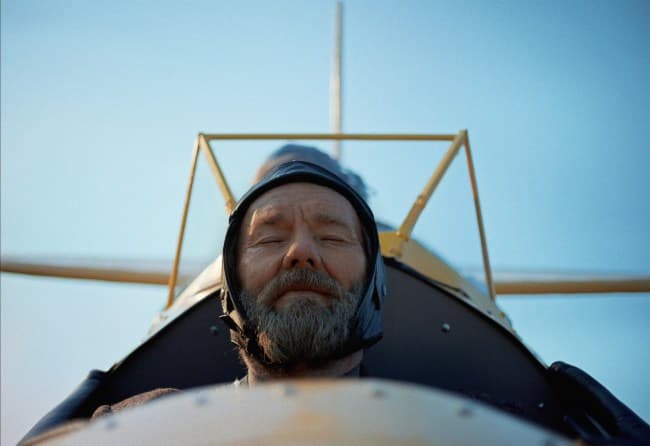
Director Clint Bentley, influenced by personal loss and the birth of his child, adapted Denis Johnson's "Train Dreams." The film focuses on logger Robert Grainier, aiming to capture life's subtle, often mundane, yet deeply meaningful moments. Bentley sought a narrative that felt like slipping through time, inspired by filmmakers like Tarkovsky and Kiarostami.
The story unfolds against the backdrop of technological change, with Grainier depicted as an innocent bystander rather than a participant in progress. Bentley relates this to his own experience growing up without the internet and now living in a digital age. The adaptation intentionally broke away from conventional narrative forms, striving to mirror life's organic flow.
The film's structure is built on ephemeral moments, with the first half detailing Grainier's love, home, and family, followed by a tragic fire. The second half navigates his grief, with its arc based on emotional journey rather than plot. Bentley noted the book's original ending was adapted, weaving in elements like "Wolf Boy" and John Glenn's orbit.
A crucial aspect of "Train Dreams" is its exploration of memory. Bentley and editor Parker Laramie incorporated alternate takes and unseen scenes into the film's climax. This technique highlights how memory changes, presenting a sweeter recollection of past events, such as a child's reaction to a magic trick.
Bentley and co-writer Greg Kwedar intentionally kept the script as written before production. They view this as a feature, not a flaw, allowing for comparison between the script's initial vision and the final film's execution. This approach underscores the thematic exploration of how our recollections of life evolve.