Home / Arts and Entertainment / Stevie Wonder: Breaking Motown's Chains
Stevie Wonder: Breaking Motown's Chains
8 Nov
Summary
- Wonder broke free from Motown's creative constraints in 1972.
- He pioneered innovative sounds using revolutionary computerized instruments.
- Talking Book redefined musical possibilities, influencing future artists.
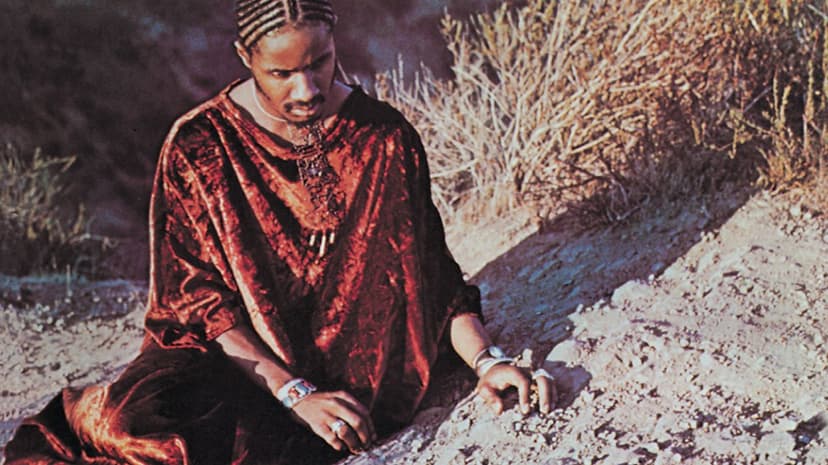
In 1972, Stevie Wonder achieved a profound artistic liberation, moving beyond Motown's restrictive environment. His albums from this period showcased a remarkable breadth of talent and a signature sound.
Wonder's prior work was often constrained by Motown's production demands. However, by the late 1960s, he embraced new musical movements, seeking the freedom to fully express his vision. This pivotal shift allowed him to explore innovative sounds and lyrical themes.
He began to exert complete control over his music, evident in albums like Music of My Mind and Talking Book. These works featured bold artistic statements, utilizing revolutionary computerized instruments to craft a unique sound.
The influence of contemporaries like Marvin Gaye and Sly Stone, who successfully incorporated social commentary into their music, further inspired Wonder. This era marked his transition from a young prodigy to a mature artist capable of addressing love and social issues.
Collaborations with figures like Sylvia Moy and Syreeta Wright were crucial, refining his songwriting with eloquent phrasing and emotional depth. The innovative use of synthesizers, particularly the T.O.N.T.O. system, humanized electronic music, adding intimacy and spontaneity.
Talking Book, released in October 1972, set a new artistic standard. Its combination of musical styles and themes became the benchmark against which Wonder's future work was measured, solidifying its place as a landmark album.


