

Home / Arts and Entertainment / Rama's Color: Ancient Texts vs. Modern Cinema
Rama's Color: Ancient Texts vs. Modern Cinema
9 Apr
Summary
- Valmiki's Ramayana describes Rama as dark-brown, not fair-skinned.
- Ancient art and southern cinema traditions favored a blue-black Rama.
- Modern cinema and television often depict Rama with fair skin.
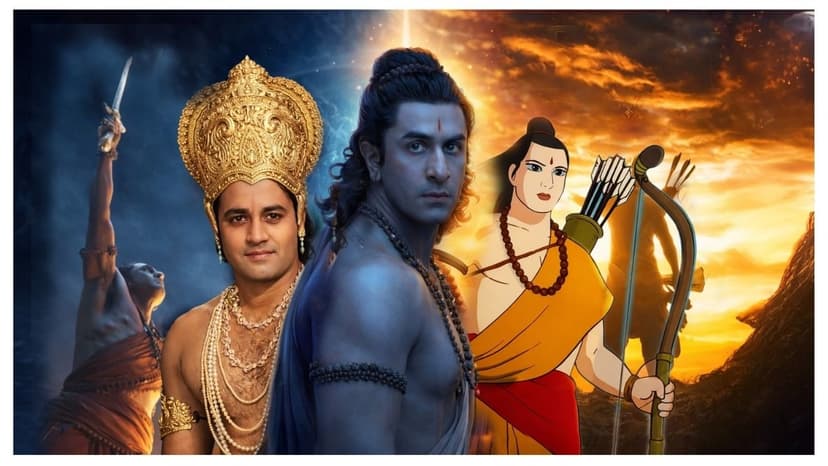
The recent glimpse of Nitesh Tiwari's Ramayana has reignited a centuries-old debate concerning Rama's complexion. Valmiki's Ramayana, the source text, describes Rama as having a dark-brown or blue-black complexion, a hue sometimes referred to as 'Rama Blue' in Tamil Nadu.
Historically, ancient Indian art and South Indian cinema, such as NT Rama Rao's portrayal in 'Lava Kusa' (1963), adhered to this darker depiction. However, the popular 1987 Doordarshan serial 'Ramayan,' starring Arun Govil, presented a fair-skinned Rama, which profoundly shaped the popular imagination.
Technological advancements in pigment and the mass production of art, particularly through Raja Ravi Varma's lithographs, also contributed to standardizing a luminous blue Rama. More recently, films like 'Sri Rama Rajyam' continued the blue palette, while 'Adipurush' attempted a dusky tone.
This visual evolution has prompted discussions about whether artistic choices are based on textual accuracy, historical pigment availability, or ideological preferences. The ongoing debate underscores the significance of accurate representation, especially as this new film aims for a global reintroduction of the epic.

