Home / Arts and Entertainment / Pune Temple: Ganesha with Six Arms, Three Trunks!
Pune Temple: Ganesha with Six Arms, Three Trunks!
9 Jul
Summary
- Temple features a rare Ganesha idol with six arms and three trunks.
- An underground chamber, submerged most of the year, opens only on Guru Purnima.
- The 18th-century temple showcases inscriptions in Sanskrit, Devanagari, and Persian.
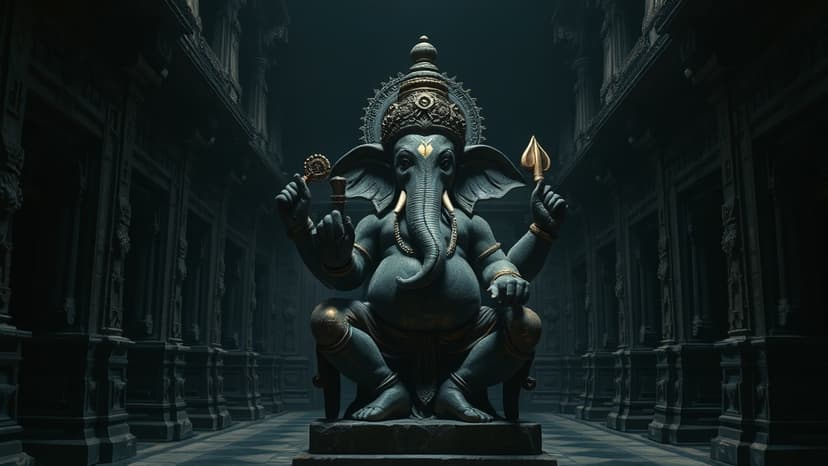
In Pune's Somwar Peth lies the Shree Trishunda Ganpati Temple, an 18th-century marvel housing one of India's rarest Ganesha idols. Unlike the familiar depiction, this deity boasts six arms and three trunks, majestically seated on a peacock. The temple's name, Trishunda, directly translates to 'three trunks,' referring to this unique icon carved from black basalt stone.
Historians suggest the three trunks may symbolize the Hindu trinity of Brahma, Vishnu, and Shiva, or represent the past, present, and future. The temple's architecture, built between 1754 and 1770 during the Peshwa era, is a notable fusion of Rajasthani, Malwa, and South Indian influences.
Intriguing carvings within the temple, such as British soldiers with a rhinoceros, offer a rare glimpse into contemporary political history, possibly referencing the aftermath of the Battle of Plassey in 1757. This historical artistry adds another layer of fascination.
A significant mystery surrounds the temple's basement, which contains an underground chamber housing the samadhi of Bhimjigiri Gosavi, the temple's founder. This sacred space remains submerged for most of the year, with access granted only on Guru Purnima when the water temporarily recedes.
Further enriching its historical significance, the temple features inscriptions in Sanskrit, Devanagari, and Persian, hinting at a multicultural past. Located near Pune Junction and Pune International Airport, it is easily accessible via taxi or cab.


