Home / Arts and Entertainment / 'The Odyssey': Nolan's Epic Film Questions Its Own Point
'The Odyssey': Nolan's Epic Film Questions Its Own Point
18 Jul
Summary
- Christopher Nolan's 'The Odyssey' is a $250 million film.
- The film adapts Homer's epic poem into a nonlinear narrative.
- Critics question the film's purpose beyond its cinematic spectacle.
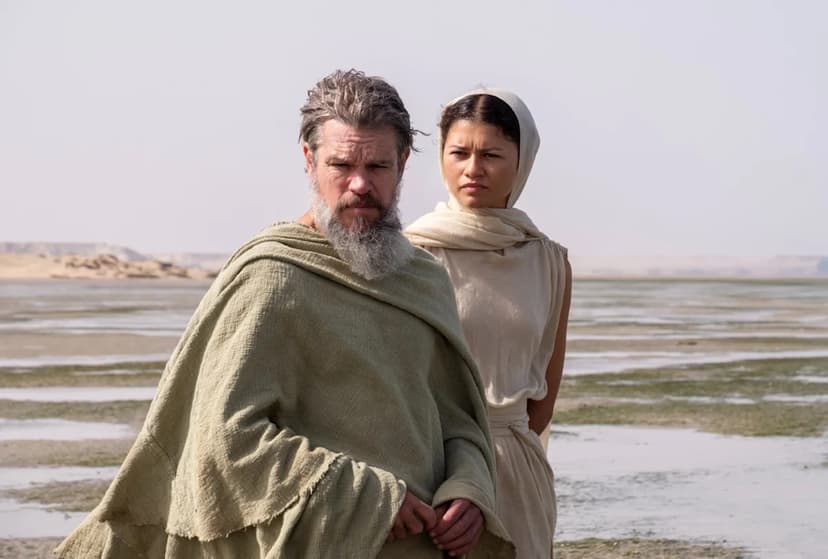
Christopher Nolan's latest cinematic endeavor, "The Odyssey," a $250 million adaptation of Homer's ancient Greek epic, has sparked debate regarding its artistic merit and underlying purpose.
Nolan, fresh off the success of "Oppenheimer," opted to tackle a work he identified as a "curious gap in Hollywood history." The film employs a nonlinear structure, interweaving perspectives from Odysseus, Penelope, and Telemachus.
The narrative unfolds ten years after the Trojan War, with Odysseus absent and his kingdom facing turmoil from suitors. The film revisits classic elements like Calypso and a cyclops, with notable alterations including the reimagining of the Trojan Horse as a discovery on the beach.
Despite its impressive scale and Nolan's established directorial prowess, "The Odyssey" is criticized for rehashing themes like playing God and human mistreatment, which have been explored more effectively in his previous works.
A standout moment involves Odysseus' encounter with sirens, where he learns that "what you want the most is what you already had," a sentiment that critics suggest encapsulates the film's self-indulgent ambition.
Ultimately, the film's extensive budget and Nolan's creative freedom are seen by some as leading to an opulent yet ultimately aimless exploration of familiar territory.


