
Home / Arts and Entertainment / Dhurandhar: The Artist Who Celebrated India
Dhurandhar: The Artist Who Celebrated India
2 May
Summary
- A new book highlights artist MV Dhurandhar's five-decade career.
- The book explores Dhurandhar's contribution to nationalism and art.
- His work is compared to contemporaries like Tagore and Sher-Gil.
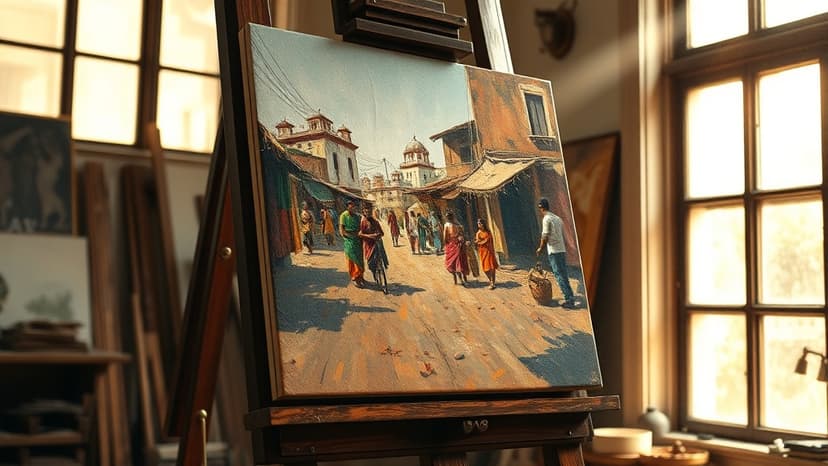
Researcher and art historian Sandeep Dahisarkar has authored a new 370-page book on the artist Rao Bahadur MV Dhurandhar, seeking to rectify his historical neglect. Titled "Rao Bahadur MV Dhurandhar: A Painter from the Bombay School of Art," the volume documents the artist's extensive body of work spanning five decades.
The book positions Dhurandhar within the context of early 20th-century Indian art, detailing his academic-realist contributions to the nationalist movement. It examines his engagement with colonial rulers and his illustrations of Indian cities and women.
Author Dahisarkar emphasizes Dhurandhar's role in celebrating Indian traditions and festivals. He notes the artist's ability to draw viewers directly into his work, a key indicator of artistic success during his lifetime.
Art historian Alka Pande highlighted Dhurandhar's celebratory portrayal of India, contrasting his devotional approach with mere documentation. Pande placed his artworks alongside contemporaries such as Abanindranath Tagore and Amrita Sher-Gil, underscoring his unique contribution.
Pande further elaborated on Dhurandhar's significance, pointing to works like "Chhatrapati Shivaji Maharaj's coronation" and "Shivaji in Aurangzeb's court." She noted his ability to localize academic realism, effectively capturing India's historical and cultural identity and aligning with emergent nationalistic sentiments.
