Home / Arts and Entertainment / Moritz de Hadeln: A Legacy of Global Film Discovery
Moritz de Hadeln: A Legacy of Global Film Discovery
29 Aug
Summary
- He ran Venice and Berlin Film Festivals, championing global cinema.
- De Hadeln brought rare Chinese and Eastern European films to the West.
- He pioneered LGBTQ+ recognition at film festivals with the Teddy Awards.
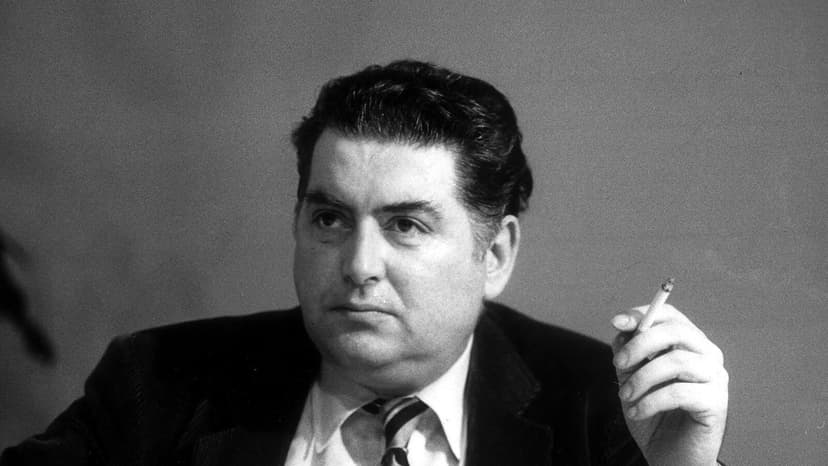
Moritz de Hadeln, a transformative figure in international cinema, passed away on July 4 at the age of 85. His career was dedicated to discovering and showcasing films from around the globe, much like an explorer seeking rare treasures.
De Hadeln's extensive experience included leading the Venice Film Festival in 2002 and 2003, and notably, serving as the head of the Berlin Film Festival for over two decades from 1979 to 2001. He also founded the Nyon International Documentary Film Festival in Switzerland in 1969 and directed the Locarno International Film Festival from 1972 to 1977.
A significant achievement of de Hadeln was his early engagement with China. He was among the first Western curators to visit the country when it was largely closed off, successfully introducing films like Zhang Yimou's "Red Sorghum" and Chen Kaige's "Farewell My Concubine" to Western audiences.
Furthermore, de Hadeln was a trailblazer in bridging ideological divides during the Cold War. He ventured behind the Iron Curtain, bringing previously restricted films from the Soviet Union and Eastern European countries to Western festivals, exemplified by the 1979 Golden Bear winner "Tema."
Beyond his diplomatic skills in film acquisition, de Hadeln championed inclusivity. In 1987, he co-founded the Teddy Awards at the Berlinale, providing a groundbreaking platform for gay filmmaking at a major international festival, a move that faced considerable controversy at the time.
His influence extended to the Venice Film Festival, where he took the helm in 2002 during a critical period. Despite his diverse international background, he deeply cherished Italy and its cinematic traditions, leaving a lasting imprint on the festival's programming.


