Home / Arts and Entertainment / Met Opera's Tristan: A tale of two acoustics
Met Opera's Tristan: A tale of two acoustics
26 Mar
Summary
- Opera acoustics vary significantly depending on seating location.
- Set design and orchestra balance impact vocal clarity.
- Conductor's sensitivity to acoustics is crucial for balance.

Recent performances of Wagner's "Tristan und Isolde" at the Metropolitan Opera have highlighted significant acoustic disparities for audience members. Those seated in the Orchestra level often report a superior sound experience, with singers like tenor Michael Spyres and soprano Lise Davidsen delivering powerful performances. However, patrons in the Balcony and Family Circle, the uppermost seating sections, frequently describe diminished vocal clarity and an overpowering orchestra. This phenomenon has led to discussions about whether audience members are truly hearing the same performance.
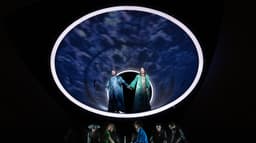
Two primary factors are believed to contribute to these acoustic inconsistencies: the production's scenic design and the orchestra's volume. Es Devlin's set, featuring dramatic tunnels, can sometimes amplify singers from certain vantage points but dampen their voices from others. Additionally, conductor Yannick Nézet-Séguin's approach to balancing the orchestra with the singers has been criticized for often prioritizing the orchestral sound, rendering some of the libretto inaudible from the upper seats. The opera's final performance is scheduled for April 4.
Critics suggest that refinement of the staging and greater sensitivity from the conductor are necessary to ensure a consistent auditory experience for all patrons. While the production is nearing the end of its run, opportunities for adjustments could arise if the Met decides to revive this staging in the future. The orchestra, in particular, has the ability to adjust its balance immediately, a fix that only Nézet-Séguin can implement.