Home / Arts and Entertainment / LV Flower Motif Found on 12th Century Indian Temple
LV Flower Motif Found on 12th Century Indian Temple
22 Feb
Summary
- A travel influencer spotted a Louis Vuitton-like flower on a 12th-century temple.
- The Chennakeshava Temple in Karnataka, India, features the identical design.
- Georges Vuitton officially created the LV monogram in 1896.
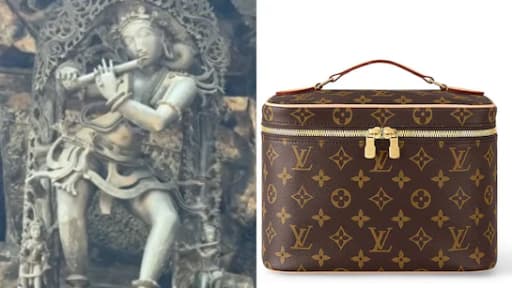
A 12th-century temple in Karnataka, India, features a four-petal flower design that bears a striking resemblance to Louis Vuitton's iconic monogram motif. Australian travel influencer Liam Richards shared his discovery from the Chennakeshava Temple in Belur, suggesting it might be the origin of the luxury brand's design.
Richards highlighted the identical four-petal flower during his visit to the ancient temple, which is renowned for its exquisite craftsmanship. He noted that the design appears on sculptures, leading him to believe it could be a source of inspiration for Louis Vuitton.
Officially, the Louis Vuitton monogram was created in 1896 by Georges Vuitton, inspired by a blend of Art Nouveau, Japonism, and Gothic heraldic art. The iconic design features interlocking 'LV' initials alongside geometrical floral motifs and stars.
This observation raises questions about the origins of fashion design inspiration and whether ancient Indian art has influenced global brands without due credit.