Home / Arts and Entertainment / Writer Mutilates Modernity: Sante's Artful Collages
Writer Mutilates Modernity: Sante's Artful Collages
1 Apr
Summary
- Lucy Sante transforms found materials into unique collages.
- Her work is displayed in current exhibitions in Manhattan.
- Sante's collages blend text and images with irony.
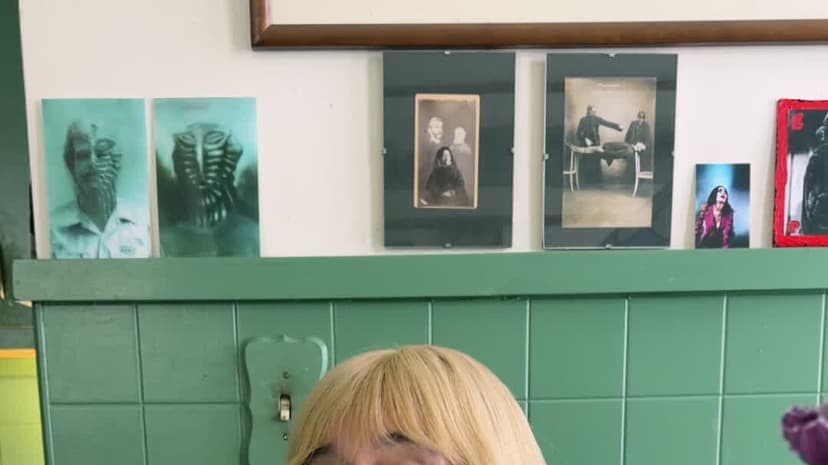
For 45 years, writer and historian Lucy Sante has explored the visual record of the modern era, and in her spare time, she reinterprets it through collage. Several dozen of her small, word-based collages are currently on view in solo exhibitions in Manhattan: "Two Strikes on a Snow Man" at the Picture Theory gallery and "Knots" at the American Academy of Arts and Letters.
Sante, 71, meticulously cuts and glues images from flea markets, European antiques markets, and eBay. Her materials include postcards from the interwar period, Montgomery Ward catalogs, and 1950s magazines. She also actively seeks 19th-century chromolithographs and vintage comic books.
The collages are known for being economical, punning, and often bleakly ironic. One piece features a postcard of a cathedral interior with a pasted-on boy blowing a bubble, overlaid with the word "OOF." This juxtaposition invites associations, echoing influences like Surrealist artist René Magritte and collagist Kurt Schwitters.
These artworks are exhibited in settings that enhance their meaning. At the American Academy, Sante's postcard collages are displayed horizontally under glass, allowing them to visually connect with the books on the shelves above, creating dialogues between the collage elements and their surrounding texts.
Sante's collages are deeply rooted in her personal history and her academic work. Her books, such as "Low Life" and "Folk Photography," delve into the ephemera and visual culture of the past. Her artistic practice, which began in her youth with fanzines and poetry fliers, now sees her found materials archived at the New York Public Library.
While some might see nostalgia in her use of mid-century materials, Sante denies this, defining nostalgia in a psychologically aware manner in her preface to "Low Life." She also refutes any parallels between her collage work and her gender transition, which she publicly came out about five years ago, stating a general difficulty in associating herself with groups.


