Home / Arts and Entertainment / Vitruvius' Lost Building Found in Italy!
Vitruvius' Lost Building Found in Italy!
23 Jan
Summary
- A 2,000-year-old Roman basilica matching Vitruvius' descriptions was found.
- The architect Marcus Vitruvius Pollio lived in Fano in the 1st century BC.
- The discovery is hailed as a monumental find for archaeology and Italy.
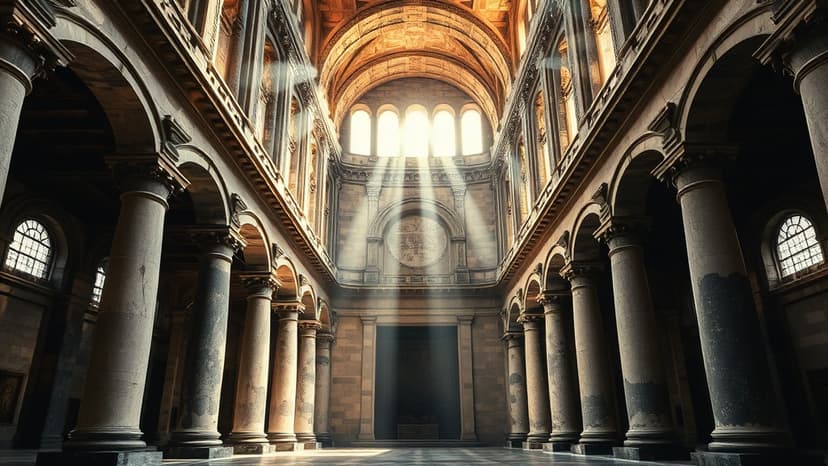
A groundbreaking archaeological discovery has been made in Fano, Italy, with the unearthing of a 2,000-year-old Roman basilica. This ancient public building for law and commerce perfectly aligns with the detailed descriptions provided by Marcus Vitruvius Pollio, the celebrated Roman architect who authored "De Architectura." Vitruvius resided in Fano, then known as Fanum Fortunae, during the 1st century BC, and described this very structure in his influential treatise. The basilica's dimensions and column placement precisely match his writings, confirming it as his work. This find is considered exceptionally significant, drawing comparisons to the discovery of Tutankhamun's tomb and marking a pivotal moment in architectural history.
This basilica, featuring colossal columns approximately 15 meters tall and 1.5 meters wide, remained lost for centuries despite extensive searches by experts. Its rediscovery provides the first concrete evidence of a building actually constructed by Vitruvius, whose work profoundly influenced architects like Leonardo da Vinci. The discovery is expected to significantly boost tourism and culture in the Le Marche region, an area often overlooked. Italian officials have lauded the find as a crucial piece of Italy's identity, splitting archaeological history into "before and after."