

Home / Arts and Entertainment / Lost Mourning Jewel Linked to 1635 Masterpiece
Lost Mourning Jewel Linked to 1635 Masterpiece
19 Apr
Summary
- A heart-shaped pendant from 1634 has been rediscovered.
- The jewel was depicted in a 1635 painting by John Souch.
- The pendant commemorates a six-year-old boy named Robert.
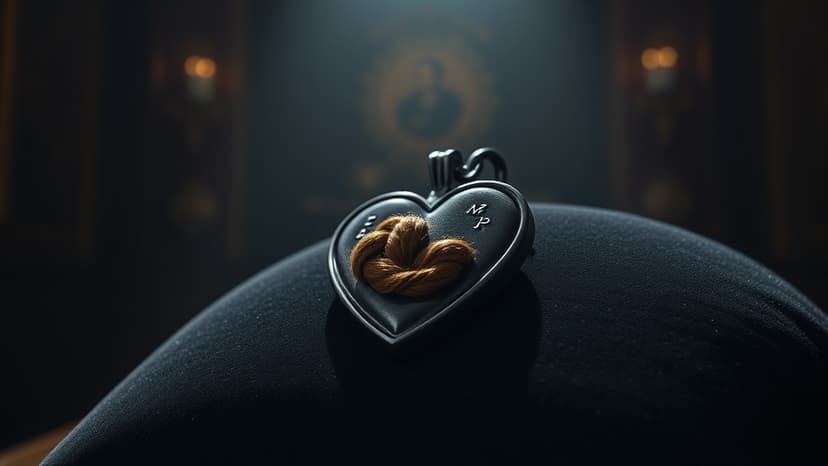
A poignant 17th-century mourning jewel, created in 1634 to memorialize a six-year-old boy named Robert, has been rediscovered nearly four centuries after its creation. This heart-shaped pendant, made with the child's blond hair and bearing a death's head skull, was immortalized in John Souch's 1635 painting, "Sir Thomas Aston at the Deathbed of His Wife." The painting, housed at the Manchester Art Gallery, depicts Sir Thomas Aston mourning his late wife and child.
The pendant's inscriptions, which cannot be read in the painting, reveal the depth of the family's sorrow, stating: "Your Robert died 4 May 1634 ... In whom was our delight, through whom was our consolation, with whom the hope of his parents first perished." The jewel remained with the Aston family until an 1862 sale. Its present owners acquired it 30 years ago, unaware of its significance, until they spotted it in Souch's painting.
Historian Martyn Downer, a specialist in historical objects, noted the pendant's exceptional condition and emotional weight, stating it is "highly personal" and "not a jewel to display wealth or status." Valued at £650,000, the pendant's rarity is significant, as 17th-century jewelry is scarce. The rediscovery offers scholars new avenues for understanding Souch's enigmatic portrait.
The pendant will be unveiled to the public at the Treasure House Fair at the Royal Hospital Chelsea from June 24 to 30. Fiona Corridan of Manchester Art Gallery expressed excitement about the discovery, noting it would be wonderful to potentially reunite the pendant with the painting that preserved its image for centuries.
