

Home / Arts and Entertainment / Giant 17th Century Astrolabe Fetches Millions at Auction
Giant 17th Century Astrolabe Fetches Millions at Auction
26 Apr
Summary
- A massive 17th-century brass astrolabe from Jaipur is now for sale.
- This astronomical tool is reportedly the largest of its kind.
- It was created in Lahore by master craftsmen and features Persian and Sanskrit inscriptions.
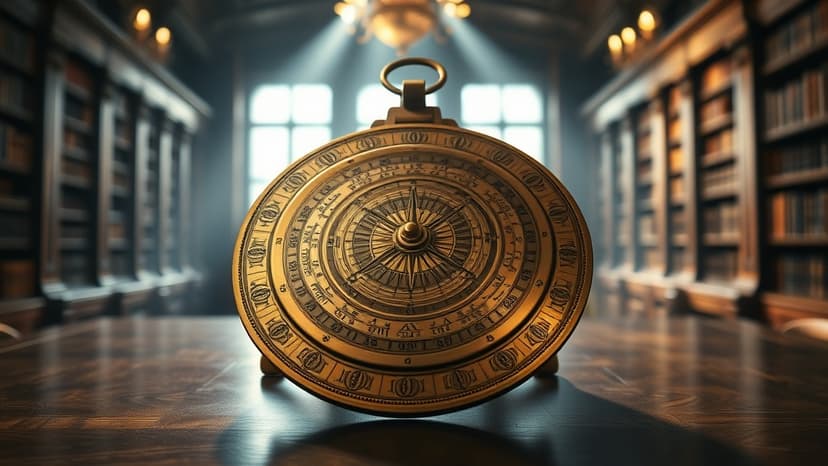
A magnificent 17th-century brass astrolabe, originating from the royal collection of Jaipur, will be auctioned at Sotheby's in London on April 29, 2026. This remarkable hand-held astronomical computer is noted for its immense size, with its head of department at Sotheby's suggesting it may be the largest ever created and that it has never been publicly exhibited.
Originally belonging to the royal household of Maharaja Sawai Man Singh II of Jaipur, the astrolabe was later passed to his wife, Maharani Gayatri Devi, before entering a private collection. Astrolabes, intricate metallic disks, were historically used for timekeeping, celestial mapping, and determining the direction of Mecca, functioning as complex two-dimensional projections of the universe.
This particular instrument was meticulously crafted in Lahore, a prominent center for astrolabe production in the Mughal Empire during the early 17th century. It was made by the brothers Qa'im Muhammad and Muhammad Muqim, renowned members of the "Lahore School" of astrolabe makers. The astrolabe's substantial size and opulent design reflect its patron, Aqa Afzal, a nobleman who administered Lahore under Mughal emperors Jahangir and Shah Jahan.
Weighing 8.2kg and measuring nearly 30cm in diameter, this astrolabe is almost four times larger than typical Indian astrolabes from its era. It exhibits a unique cross-cultural element, with star pointers bearing names in both Persian and Sanskrit, inscribed in Devanagari script. The detailed craftsmanship includes 94 inscribed cities with their longitudes and latitudes and 38 star pointers connected by intricate floral designs.
Sotheby's anticipates strong interest from collectors and institutions, with an estimated sale price of £1.5-2.5 million. This figure could surpass the current record for an Ottoman astrolabe, which sold for just under £1 million in 2014. The astrolabe will be on display at Sotheby's London galleries from April 24 to April 29, 2026.
