Home / Arts and Entertainment / Jagannath Panda's 'The Long Now of Us' Exhibition Opens
Jagannath Panda's 'The Long Now of Us' Exhibition Opens
22 Feb
Summary
- Jagannath Panda's solo exhibition re-examines time, memory, and cultural symbolism.
- The exhibition is inspired by regional sensibilities and cyclical returns.
- It runs until February 27, 2026, at Lalit Kala Akademi, Bhubaneswar.
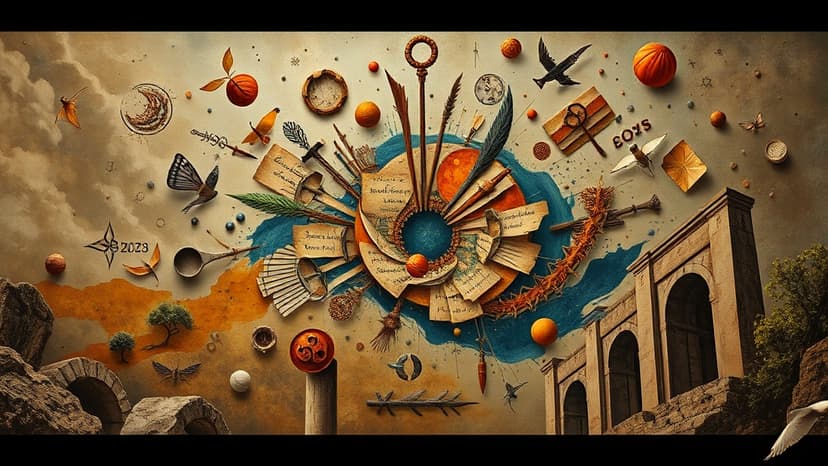
Internationally acclaimed contemporary artist Jagannath Panda has returned to his hometown, Bhubaneswar, for a significant solo exhibition titled 'The Long Now of Us.' This exhibition, which runs until February 27, 2026, at the Lalit Kala Akademi, Regional Centre, represents a homecoming after a three-decade artistic journey.
Panda's work delves into profound themes of time, memory, and cultural symbolism, drawing inspiration from regional sensibilities and the idea of cyclical returns. The exhibition, curated by Sibdas Senguptam, utilizes collage, sculptural interventions, and philosophical inquiry to explore ecology, community, and the pervasive image circulation of late capitalism.
The artist discusses how exhibiting in his hometown reshapes his understanding of his practice, noting that the perception of his work shifts within its place of origin. Symbols like the Odissi dancer or chariot gain new contemporary meanings when viewed in Odisha, offering a transformative lens on his own art.
'The Long Now of Us' is framed around Gopinath Mohanty's concept of cyclical time, which Panda integrates into his exploration of memory and personal evolution. This notion of time, rooted in community rituals and collective experience, guided the creation of the works presented. Collage, for Panda, is an epistemic framework that resists the 'circulationism' of late capitalism by creating a 'third meaning' from decontextualized materials, offering a counter-site to an over-rationalized world.
A prominent symbol in the exhibition is the chariot, reimagined as a mobile archive of social, political, and ecological memory. Panda questions if this structure can transcend its cultural role to become an ecological imagination, speaking to ethical responsibilities and collective power for a sustainable future. His practice intervenes in perception, aiming to create ruptures that destabilize notions of normalcy and respond to ecological precarity and class diversity.