

Home / Arts and Entertainment / Fight AI's Rise: 'Human Made Mark' Protects Film Craft
Fight AI's Rise: 'Human Made Mark' Protects Film Craft
23 Apr
Summary
- A new trust mark certifies films created without AI assistance.
- The Human Made Mark aims to promote human artistry in filmmaking.
- Verification involves submitting evidence like call sheets and photos.
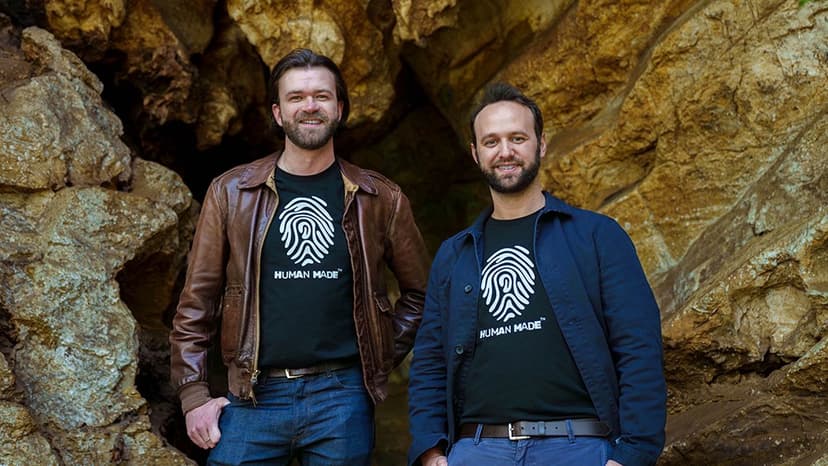
Amidst growing concerns over AI-generated content in film, The Human Made Mark has been launched as a certification to highlight human artistry. This initiative provides a trust mark, appearing as an ident or end-credit certification, to verify that a film was not created with AI assistance. The founders, William Grave and Eric Gruber, symbolically launched the program at the 29,000-year-old Pech Merle cave paintings in France, emphasizing the innate human nature of creativity.
The Human Made Mark employs a rigorous verification process, requiring producers or production companies to submit evidence such as call sheets, behind-the-scenes photos, and credit lists, along with a legal declaration. This makes it the first initiative of its kind to introduce such a level of independent verification for film production. The certification currently supports live-action and stop-motion animation, with plans to expand to other animation techniques.
Industry professionals, including Oscar-winning designers and cinematographers, have already expressed support for the mission to protect human roles within the film industry. The mark is described as the 'Michelin Star of human craft,' aiming to create a premium for human-made work and inspire future artists. Legal experts have also lauded the initiative for its pioneering use of law to establish a boundary against AI encroachment in creative professions, ensuring AI remains a tool rather than a replacement for human artists.
Further underscoring its commitment, The Human Made Mark recently collaborated with Kodak Film on a Valentine's Day visual tribute to filmmakers, voiced by actor Ruby Barker. This collaboration garnered significant attention, surpassing 200,000 views across social platforms, and highlighted the vital importance of supporting human-made art in the evolving landscape of filmmaking.
