Home / Arts and Entertainment / Artist's Wild Life Inspires New Opera
Artist's Wild Life Inspires New Opera
10 Feb
Summary
- Katsushika Hokusai survived numerous hardships to create iconic art.
- An opera explores Hokusai's non-linear life and his bond with his daughter.
- The production features a unique blend of Western and Japanese musical elements.
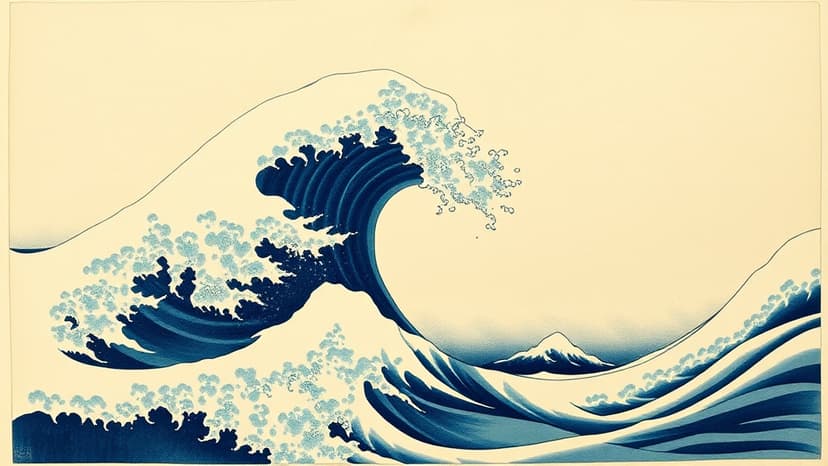
The life of Katsushika Hokusai, the 18th-century Japanese artist famed for "The Great Wave," has been transformed into an opera by Scottish Opera. Hokusai, born in 1760 in Edo (now Tokyo), lived an exceptionally long and eventful life for his time, surviving a stroke, lightning strike, and a studio fire.
His prolific career, spanning over 30,000 works under numerous names, showcased constant reinvention. "Under the Wave off Kanagawa," part of his "Thirty-Six Views of Mount Fuji" series, remains one of the most recognizable images globally.
The opera, titled "The Great Wave," adopts a non-linear narrative structure, beginning with Hokusai's funeral. This approach mirrors Eastern philosophical perspectives and highlights the central theme of his relationship with his talented daughter, Ōi.
Composer Dai Fujikura and librettist Harry Ross were inspired by Hokusai's resourcefulness and Ōi's unusual independence. Their collaboration, partly developed during the Covid lockdown, draws from early Hokusai biographies and incorporates a blend of Western orchestral sounds with traditional Japanese instruments like the shakuhachi.
Dr. Philipp Franz von Siebold, a German botanist, appears as the sole non-Japanese character, introducing Prussian Blue pigment, which inspired Hokusai's vibrant Mount Fuji series. The opera's staging, by Satoshi Miyagi, emphasizes cross-cultural collaboration, with plans for a 2027 transfer to Tokyo and Kyoto.