

Home / Arts and Entertainment / Ancient Royal Kitchen Feeds Thousands Today
Ancient Royal Kitchen Feeds Thousands Today
29 Mar
Summary
- A 19th-century royal kitchen in Uttar Pradesh is undergoing restoration.
- It continues to serve thousands during religious observances.
- Restoration uses traditional lime-based mortar and 'lakhauri' bricks.
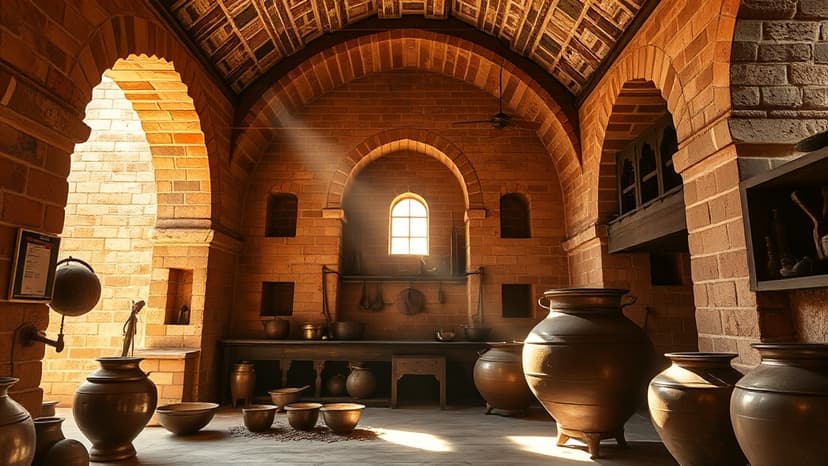
In Uttar Pradesh, India, a significant restoration is underway at a royal kitchen established in 1837 for the rulers of Awadh. This historic site within the Chota Imambara complex, originally built by Muhammad Ali Shah, continues its centuries-old tradition of serving meals to thousands, particularly during the holy months of Ramadan and Muharram. The kitchen's operations are sustained by interest from a fund established in 1839 with the East India Company, a practice continued today by the state-monitored Hussainabad Trust.
The restoration, initiated by the Archaeological Survey of India last October and expected to conclude by the end of March, focuses on authentic reconstruction. This includes recreating the original lime-based mortar using natural ingredients like wood apple pulp and gond, alongside using 'lakhauri' bricks typical of Awadhi architecture. This meticulous approach aims to precisely match the kitchen's original form and essence, honoring the architectural styles of the Mughal era and Awadh's past.
Descendants of the Awadh royal lineage and local residents emphasize the restoration's importance in preserving not just a structure, but a deeply ingrained tradition of community service and culture. The kitchen's historical significance is further highlighted by its unique dual-kitchen design, ensuring continuous operation even during restoration. For many locals, the kitchen remains a powerful symbol of continuity, evoking the spirit of its founder, Muhammad Ali Shah, and the enduring generosity it represents for the community.
