Home / Arts and Entertainment / Casting Helen: Ancient Myth, Modern Wars
Casting Helen: Ancient Myth, Modern Wars
17 Jul
Summary
- Helen of Troy's portrayal is debated amid modern interpretations.
- Ancient texts offer limited physical descriptions of Helen.
- Greek portrayals of Helen focus on her role in war and survival.
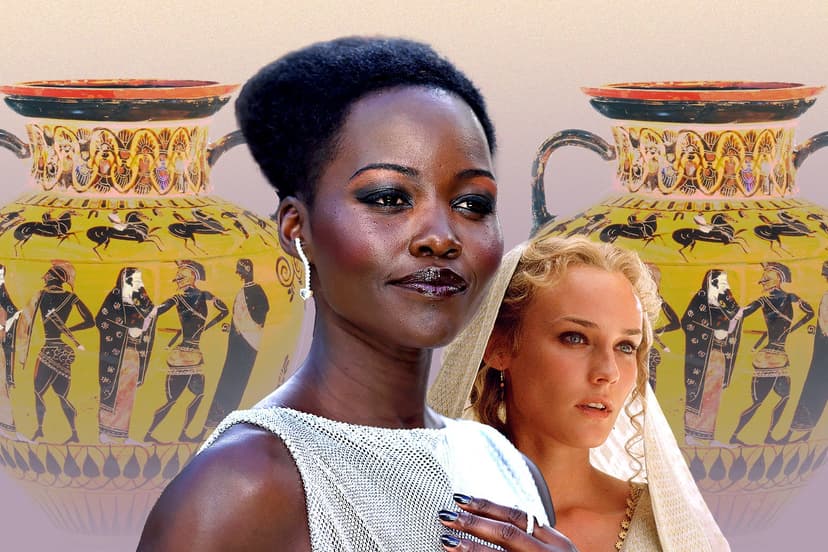
Christopher Nolan's upcoming adaptation of The Odyssey, featuring Lupita Nyong'o as Helen of Troy, has become a focal point for culture war debates. While some criticize the casting as race-bending, a deeper look into ancient Greek literature reveals that physical descriptions of Helen are scarce. Experts suggest that ancient texts were more interested in her role as a figure within conflict and her agency.
Historically, interpretations of Helen have evolved, with some scholars pointing out that the notion of a blond, fair-skinned Greek populace is a more recent construct. Ancient Greek vases, for instance, depict Helen with dark hair and conventional white skin for women, often interpreted as a status symbol rather than an ethnic identifier.
The debate surrounding Helen's appearance often overshadows her significance in ancient Greek narratives. Scholars emphasize that the Greeks themselves used characters like Helen to explore complex themes such as sexual politics, agency, and the impact of war. The focus on her beauty or hair color flattens these deeper thematic explorations.
Furthermore, the article highlights how figures like Odysseus are also subject to reinterpretation. The far-right's view of him as an uncomplicated hero of Western manhood is challenged, with scholars pointing to his portrayal as a complex, morally ambiguous figure in later Greek tragedy. This mirrors how Helen, a character constantly rethought across centuries, remains relevant for contemporary discussions.
Classics professor Denise McCoskey notes that the persistent narrative of "white Greece" stems from early 20th-century racial theories attempting to link Greeks to Northern Europe. While some suggest a connection between ancient Greece and Africa, McCoskey advocates for contextualizing ancient cultures without imposing modern racial constructs, emphasizing their respect for ancient Egypt and cultural exchange.
Ultimately, the article posits that the ongoing reinterpretation of Helen and other mythological figures is inherent to their enduring power. The discourse, though contentious, connects us to the ancient Greeks' own practice of re-examining and adapting their myths for their own times. The true merit lies in exploring what these modern reinterpretations reveal about our current moment.


