

Home / Arts and Entertainment / Hegra: Saudi Arabia's Rose-Red City of Secrets
Hegra: Saudi Arabia's Rose-Red City of Secrets
30 Mar
Summary
- Hegra, a UNESCO World Heritage site, showcases Nabataean ingenuity.
- Ancient tombs and inscriptions reveal insights into Nabataean life.
- AlUla offers a broader experience of history, nature, and culture.
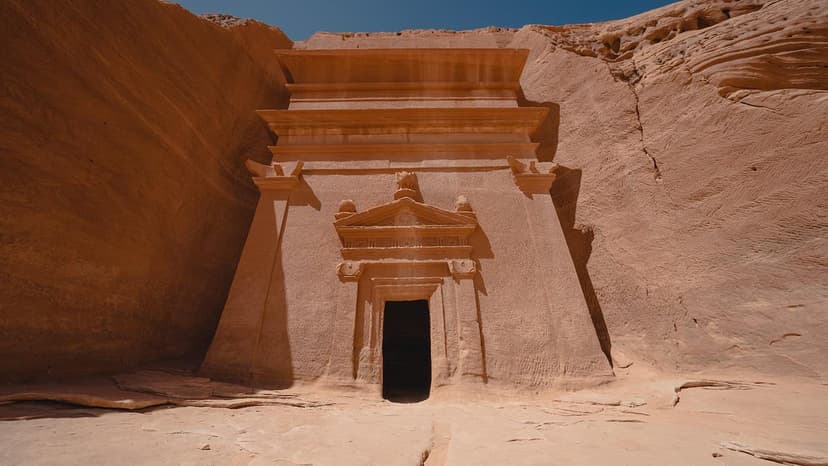
Two thousand years ago, the Nabataean civilization flourished in northwestern Saudi Arabia, centered around the majestic city of Hegra. This rose-hued city, located by an oasis, was a vital hub on the ancient incense trade route, fostering remarkable ingenuity and cultural exchange.
Today, Hegra, also known as Al-Hijr, stands as Saudi Arabia's first UNESCO World Heritage Site, designated in 2008. It offers visitors a visceral connection to the past through its dramatic sandstone monuments. Over 100 tombs, many with inscriptions and rock art dating to the first century CE, line the landscape.
The Nabataeans, whose alphabet laid foundations for modern Arabic, left behind imposing tombs and sophisticated engineering marvels, including water capture systems. Sites like Jabal Ithlib and Jabal al-Banat provide insights into their religious beliefs, social structures, and daily life.
Beyond Hegra, the AlUla region reveals further ancient narratives with Dadan's Lion Tombs and Jabal Ikmah's 'open-air library' of inscriptions. This timeless landscape blends history, heritage, and nature, offering unforgettable experiences for visitors.
