Home / Arts and Entertainment / Florence Welch Confronts Inner Demons on 'Dance Fever'
Florence Welch Confronts Inner Demons on 'Dance Fever'
17 Oct
Summary
- Album explores Welch's relationship with performance and public image.
- Lyrics delve into intense self-interrogation and personal anxieties.
- Pandemic's isolation profoundly influenced the album's creation.
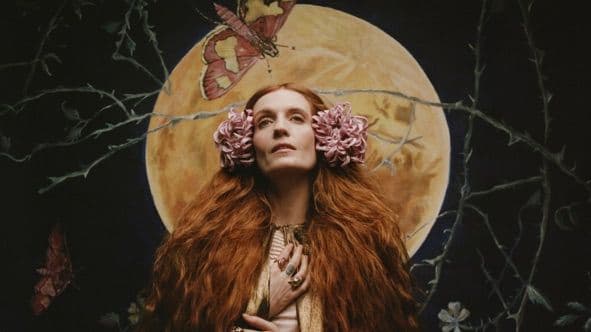
Florence Welch's latest album, 'Dance Fever,' marks a significant shift inward, with lyrics probing her connection to performance and public perception. Inspired by the historical 'dancing plague,' Welch conceived the album as a cautionary tale about the potential desire to abandon performing altogether.
The pandemic's onset during the initial stages of writing 'Dance Fever' with Jack Antonoff amplified the album's introspective nature. The resulting work is a cohesive and grandiose statement, though more internal than her previous releases. It features themes of life, death, angels, and devils, but its core lies in Welch's self-examination.
Welch grapples with seeing herself as a projection rather than an individual, fearing her tendency toward self-mythologization. The album highlights her struggle against the wisdom she seeks to impart, showcasing her wrestling with newfound knowledge rather than simply delivering it.
Key tracks like 'King' and 'Girls Against God' explore ambivalence towards motherhood and the fear of deep emotional connection. While the album occasionally falters when celebrating dance itself, it shines when Welch poses profound questions about enduring suffering and continuing to create.
Produced partially by Jack Antonoff and Dave Bayley, 'Dance Fever' maintains Florence + The Machine's characteristic propulsive energy. However, some tracks, like 'My Love,' lean into a more schmaltzy club sound, while others, such as 'Free,' explore well-worn concepts of dance's power without offering fresh perspectives.


