Home / Arts and Entertainment / Fincher Defends AI Use in Filmmaking: Innovation or Betrayal?
Fincher Defends AI Use in Filmmaking: Innovation or Betrayal?
22 Nov
Summary
- Director David Fincher defends using generative AI in filmmaking.
- AI artifacts were noted in "The Further Mis-Adventures of Cliff Booth".
- Fincher previously used AI for "Se7en" remastering and restoration.
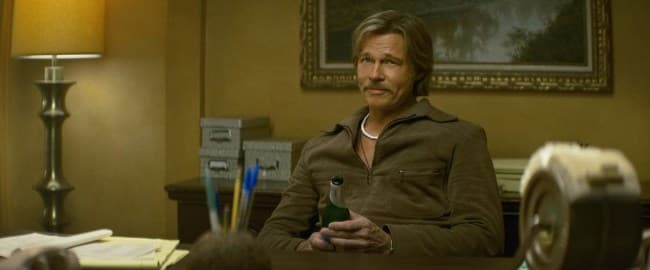
Uproar surrounds the alleged use of generative AI imagery in "The Further Mis-Adventures of Cliff Booth," a film associated with Quentin Tarantino and directed by David Fincher.
Early viewers have identified apparent generative video artifacts in flashback sequences. These include a trailer shot where a wagon appears oddly rendered. Critics see this AI usage as a fundamental betrayal of creativity, particularly from Fincher, who is known for his detailed approach.
Fincher, however, has defended his use of AI as a means to innovate in filmmaking, an art form over a century old. He told the LA Times that not being a "Luddite" means utilizing available tools.
This stance is consistent with his past use of AI. Fincher admitted to employing generative tools, though not publicly disclosed which ones, in the 4K remaster of "Se7en." This was to combat degradation on the original negative.
He described needing to remake the negative to address scratches and damage accumulated over three decades. The precision of such image restoration technology has significantly advanced.
Fincher also detailed using generative tech to fill gaps in "Se7en," such as when a camera pan exceeded its intended mark. Software generated missing information by combining performances from different takes.
He noted that the goal is for viewers not to notice these fixes. The success lies in the seamless restoration of the intended image. This makes the fix "thrillingly stupid" if undetectable.
Regarding "Cliff Booth," Fincher implies the issue is not the use of AI itself, but that its presence is now painfully obvious. Critics differentiate between restoration tools and AI used to generate new content quickly and cheaply.
Ultimately, Fincher emphasizes that tools for innovation exist and should be considered for use, questioning why filmmakers should refrain from employing them.


