Home / Arts and Entertainment / Filmmakers Navigate Chaos for Animated Gem
Filmmakers Navigate Chaos for Animated Gem
12 Feb
Summary
- Filmmakers embraced 'chaos' for authentic artistic expression.
- Pandemic forced creative solutions like oversized puppet heads.
- Stop-motion animation relies on making the impossible believable.
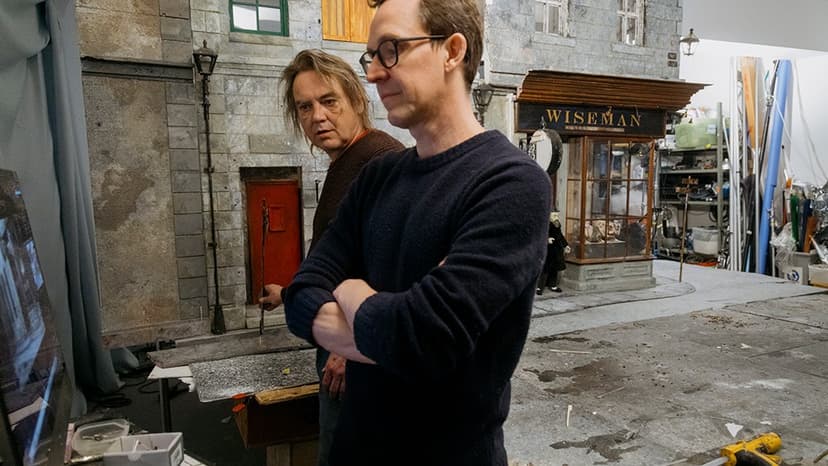
The creation of the stop-motion film "The Girl Who Cried Pearls" spanned five years, with directors Chris Lavis and Maciek Szczerbowski detailing their unique artistic process. Initially conceived as a boy collecting pearls, the story evolved into a tale about value and faith, told across two timelines.
The filmmakers embraced "chaos" as an integral part of their work, allowing for unexpected elements to shape the final product. This ethos was tested during the COVID-19 pandemic, which physically separated the directors. A significant challenge arose with oversized puppet heads, a 'mistake' they chose to incorporate, believing that over-structuring can detract from art.
Budgetary constraints also led to radical creative decisions. For scenes set in the past, the lack of funds for moving mouths resulted in the use of blank masks, a technique compared to ancient Greek theater. This approach underscored the inherent illusion of stop-motion, where inanimate objects appear to come alive.
The film's sets and backdrops are a loving homage to Montreal, the directors' home city. They sought to capture the city's melancholy and sentimentality, aiming to build a romantic mythology for its neighborhoods through art. The National Film Board of Canada provided crucial trust and support throughout the lengthy production.
"The Girl Who Cried Pearls" has garnered significant recognition, earning nominations for both the Annie Awards and an Academy Award. This marks the directors' second Oscar nomination, following their work on "Madame Tutli-Putli." The film represents a significant achievement for the National Film Board of Canada, adding to its extensive list of Oscar nominations.