Home / Arts and Entertainment / Step Back 2,000 Years: Discover Ephesus
Step Back 2,000 Years: Discover Ephesus
9 Feb
Summary
- Ephesus, a 1,600-acre UNESCO site, is Turkey's crown jewel of Greco-Roman history.
- The ancient city was a wealthy trading hub connecting East and West.
- Visible ruins largely date from its time as a thriving Roman metropolis.
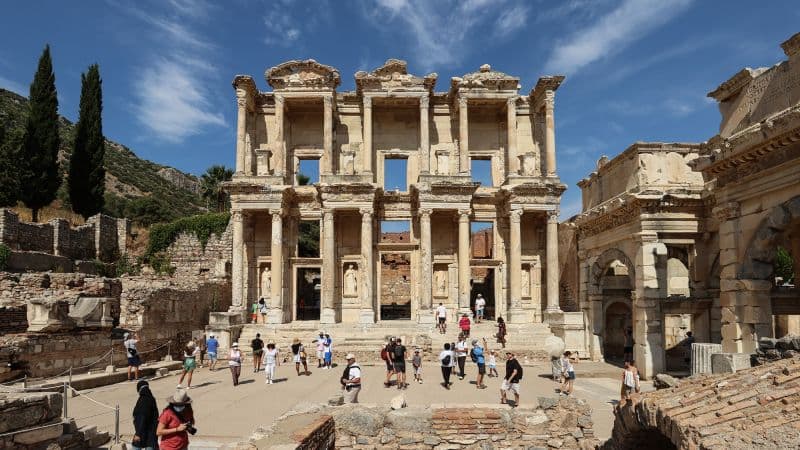
Ephesus, a vast 1,600-acre UNESCO World Heritage site in Turkey's İzmir Province, offers a striking glimpse into antiquity. This ancient Greco-Roman port city, once a thriving metropolis, draws approximately 2.5 million visitors annually. Its historical significance as a wealthy trading hub connecting Eastern and Western civilizations is evident in its remarkably preserved ruins.
The city's layout includes marble-paved streets like Curetes Street, once lined with shops and shaded walkways. Notable structures include the elegant Temple of Hadrian and the iconic facade of the Library of Celsus, which once housed over 12,000 scrolls. Evidence of daily life and ancient social customs is also visible, from public latrines to the remains of a brothel.
Ephesus also played a crucial role in early Christianity, serving as a center where Saint Paul preached for three years. The Great Theater, with a capacity of 25,000, hosted performances, assemblies, and gladiatorial contests. Plans are currently underway to potentially reconnect the city's long-dry harbor to the sea, a project that could allow visitors to arrive by boat once more.
The remains of the Temple of Artemis, one of the Seven Wonders of the Ancient World, also lie nearby. Though largely destroyed, its historical importance is immense, having been a site of significant events, including an execution and an act of arson considered early terrorism. The nearby House of the Virgin Mary is a pilgrimage site for many.