

Home / Arts and Entertainment / Apartheid's Pain: Feni's Powerful African Guernica
Apartheid's Pain: Feni's Powerful African Guernica
27 Mar
Summary
- Dumile Feni's African Guernica depicts apartheid's violence.
- It is exhibited opposite Picasso's Guernica at Reina Sofía.
- The exhibition highlights overlooked African art histories.
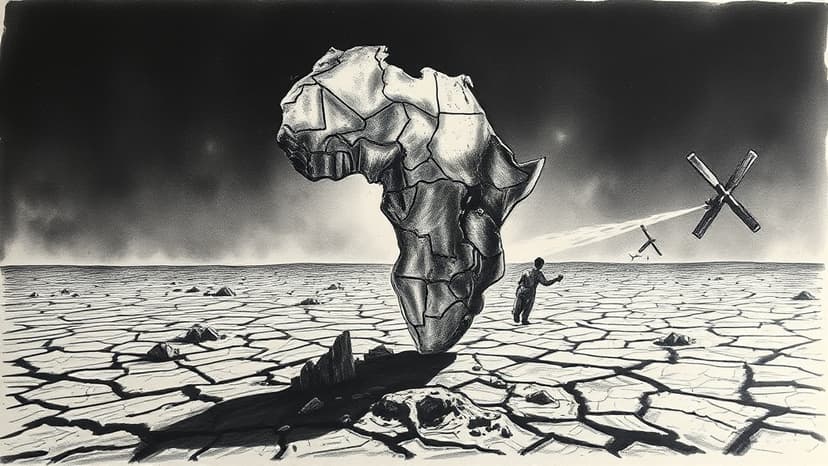
Dumile Feni's powerful 1967 drawing, African Guernica, is now featured at the Reina Sofía museum in Madrid. This significant work, which has never before been exhibited outside South Africa, is displayed prominently opposite Picasso's renowned Guernica. Feni's artwork, rendered in charcoal and pencil, powerfully conveys the rage and suffering caused by living under apartheid.
The exhibition, titled "History Doesn't Repeat Itself, But It Does Rhyme," is the first in a new annual series. Its director, Manuel Segade, stated the goal is to place works from diverse cultural backgrounds alongside Picasso's masterpiece. This initiative seeks to foster new interpretations of Guernica and actively challenge the historical biases that have marginalized African art, often miscategorizing it as primitive or merely decorative.
Curator Tamar Garb emphasized that while Picasso was influenced by African art, Feni's work responds to the distinct violence of racist tyranny, not wartime bombardment. The exhibition also showcases five other Feni pieces, including the monumental scroll You Wouldn't Know God if He Spat in Your Eye and Hector Pieterson, a striking depiction of a young apartheid victim. Feni's monumental scale in drawing, using materials like charcoal and pencil, marks him as a unique figure in 20th-century art history.
