Home / Arts and Entertainment / Duchamp's Tiny Toilet: A Giant Art Statement
Duchamp's Tiny Toilet: A Giant Art Statement
7 Apr
Summary
- A three-inch replica of Duchamp's 'Fountain' was first public acknowledgment of art status.
- Miniatures were part of a portable retrospective sold as 'Box in a Valise'.
- Later versions offered sleek, machinic urinals different from the original's charm.
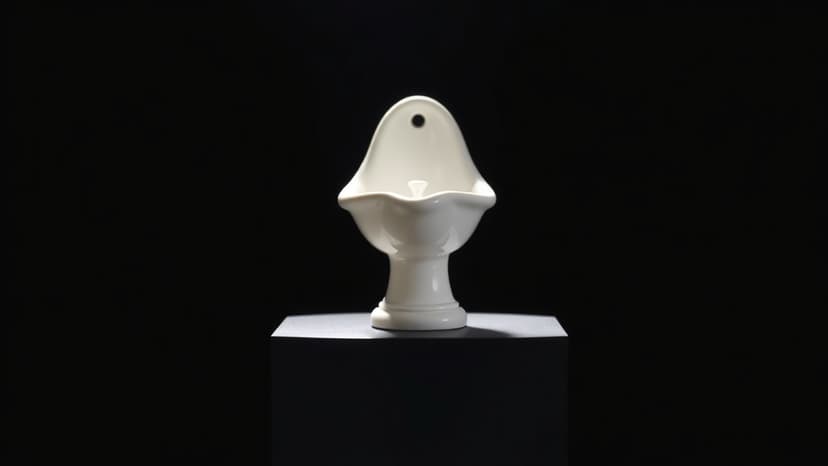
In 1917, Marcel Duchamp's "Fountain," a readymade urinal, shocked the art world. A three-inch replica, created around 1919, served as the artist's initial public endorsement of this provocative work. This miniature was meticulously crafted from papier-mâché and later cast, requiring significant time, unlike Duchamp's purely readymade pieces.
Subsequent versions of "Fountain" emerged due to its original's disappearance. In 1950, an "alreadymade" was produced for a New York exhibition using a purchased urinal, a departure from the original concept of presenting a new purchase as art. Later, in 1963, a replica for a Stockholm exhibition featured a sleek, "machinic" urinal, differing greatly from the 1917 original's ornate style.
Duchamp's process of delegating artwork creation, a "breakdown of the monolithic artist," began with "Fountain." Even the supplier and his pseudonym, "R. Mutt," contributed to its conceptualization. By 1964, "Fountain" transitioned into a commodity, with full-sized replicas cast in editions for collectors, highlighting the irony of an found object becoming an artisanal product.


