Home / Arts and Entertainment / Artist Dóra Maurer: Art Flourished Without Market
Artist Dóra Maurer: Art Flourished Without Market
27 Feb
Summary
- Dóra Maurer's art thrived due to a lack of market influence.
- Communist rule in Hungary delayed her public artistic recognition.
- Her diverse practice spanned prints, photography, and abstract painting.
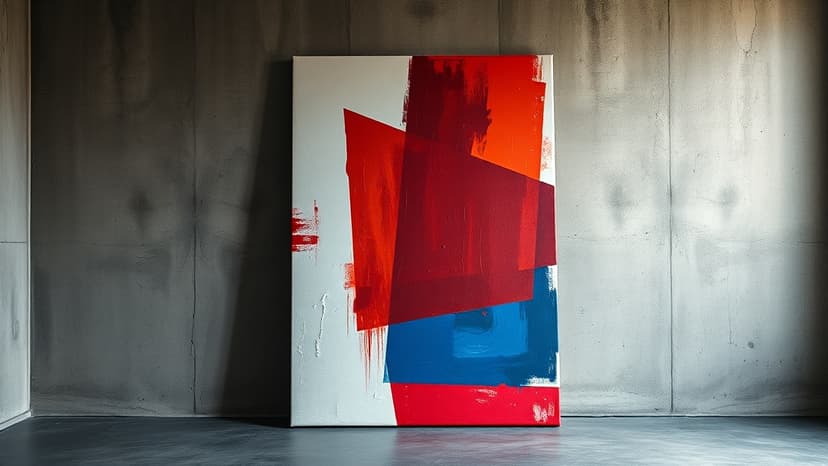
Dóra Maurer, a Hungarian artist whose innovative work gained international acclaim late in her career, passed away at 88. She once remarked that her art benefited from "a lack of market," a sentiment tied to Hungary's communist past.
Maurer was significantly impacted by Hungary's communist rule, which lasted until 1989. This period limited her ability to work and exhibit publicly as she wished until she was in her 50s.
Her artistic practice was diverse, encompassing experimental prints created in the 1960s and early 70s, such as "Traces of a Circle." She also explored photography, famously producing "Seven Twists" in 1979.
Later, in the 1980s, Maurer turned to painting, developing a style characterized by richly saturated, geometric abstract works, like "Stage II" created in 2016.
Like many avant-garde artists under communism, Maurer lived a dual artistic life, balancing public teaching and graphic design with private, experimental works.
Despite her significant contributions, Maurer resented being categorized solely as a Hungarian artist, emphasizing the European nature of her work.
Her early life was marked by hardship due to her family's bourgeois background under communist rule, affecting her educational opportunities.
After travel restrictions eased and she received Rockefeller scholarship in 1966, Maurer began exhibiting internationally, dividing her time between Vienna and Budapest with her husband.
She eventually settled in Budapest, gaining prominence as a major artist from the 2000s onwards, with her work featured in major global institutions like the Centre Pompidou and MoMA.