Home / Arts and Entertainment / Dominican Dark Comedy Turns Social Divide Into Absurd Humor
Dominican Dark Comedy Turns Social Divide Into Absurd Humor
12 Oct
Summary
- Dark comedy 'Sh*t Happens' explores Dominican social divide and power dynamics.
- A biotechnologist finds a cure for his daughter using the nanny's contribution.
- The film uses absurd humor to critique class, racism, and dependency.
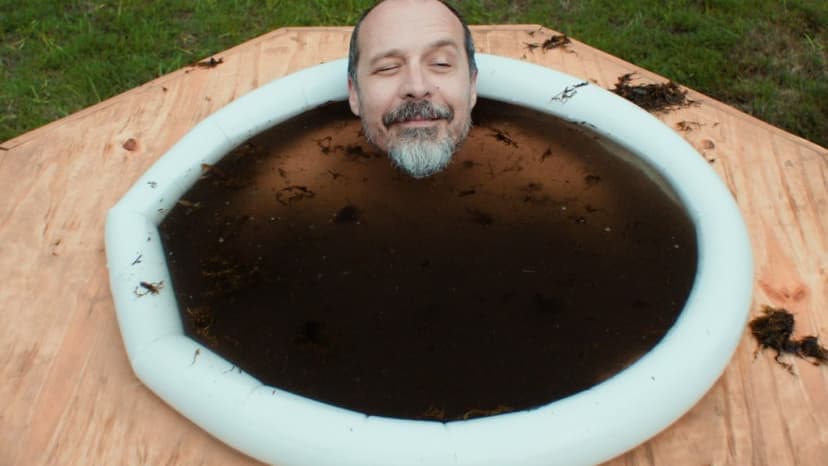
The Dominican Republic's acclaimed filmmaker José María Cabral, known for his Oscar-nominated work, presents his first dark comedy, "Sh*t Happens." The film, which premiered at Tallinn's Black Nights Film Festival, humorously dissects social stratification and power struggles within a Dominican family.
The story follows biotechnologist Raúl, who discovers a unique cure for his ailing daughter, derived from her nanny. This discovery leads to a reversal of the typical employer-employee hierarchy, sparking conflict and challenging established social dynamics within the household.
Cabral explains that the dark comedy genre was not a conscious choice but rather a narrative necessity. He sought to explore social issues and societal contradictions using humor, allowing for a more comfortable yet provocative examination of uncomfortable truths. The film aims to make audiences laugh first, then reflect on the underlying social commentary.
The film's premise, which involves a miraculous but unusual cure, emerged from Cabral's observations of the complex relationships and social hierarchies between families and their domestic staff in Latin America. He aimed to create a situation where the employer desperately needs something from the employee that cannot be bought, thereby inverting the power balance.
"Sh*t Happens" delves into themes of class, dependency, and power, illustrating how these dynamics shift when social inequalities are at play within a shared living space. While set in the Dominican Republic, Cabral emphasizes the universal nature of these unequal power dynamics between families and domestic workers, which exist globally to varying degrees.
Working with scriptwriters Miguel Yarull and Nathalie Peralta, Cabral focused on pushing tonal boundaries and taking risks. A key directive was that characters must take the absurd situation seriously, with the resulting contrast fueling much of the humor. Influences cited include the social observations of Ruben Östlund, Bong Joon Ho, and Yorgos Lanthimos, combined with a desire for the film to feel authentically Caribbean and Dominican.
The visual style, inspired by Pedro Almodóvar, features vibrant colors and carefully composed framing. The household itself acts as a character, with its ordered visual presentation initially reflecting the family's self-perception, which then becomes increasingly unsettled as relationships evolve. Wider, ensemble compositions were prioritized to capture the characters' interactions and unfolding dynamics.
Challenges during filming included maintaining composure amidst the absurd subject matter. The cast and crew approached the material with utmost seriousness, treating even the most outlandish elements with the same dedication to emotional truth as a dramatic film, which became a source of shared amusement and a key to the film's success.


