Home / Arts and Entertainment / Buildings Drenched in Color: A Visual Feast
Buildings Drenched in Color: A Visual Feast
18 Aug
Summary
- Color historically elevates architecture to new heights of resonance and delight.
- Ancient temples and medieval churches showcase early integral use of vibrant pigments.
- Modern structures incorporate color for symbolic meaning and sensory experiences.
Architects have long harnessed the power of color to transform buildings, a practice stretching back to ancient civilizations.
From early Neanderthal cave art to the polychromatic temples of Greece and Rome, color has been an integral part of human design for millennia. This vibrant tradition continued through the stained glass of medieval churches and the frescoed masterpieces of the Italian Renaissance.
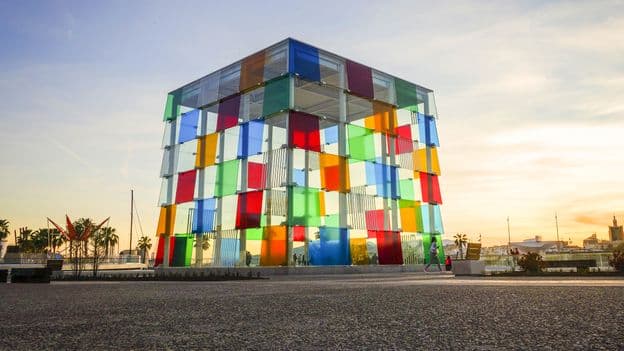
More recently, structures like the cube entrance to the Pompidou Centre in Malaga exemplify the impactful use of color and light. Designers advocate for architects to employ color with greater verve, noting its capacity to evoke profound emotional responses and create unforgettable visual experiences.
This approach is evident in diverse architectural marvels worldwide. The Meenakshi Amman Temple in Tamil Nadu, India, boasts gateways adorned in brilliant pigments, drawing visitors into a realm of wonder. Similarly, Spain's Palau de la Música Catalana in Barcelona, a 1908 concert hall, is saturated in color and decorative form, reflecting Catalan identity.
The Guardian Building in Detroit, known as the "Cathedral of Finance," features nearly two million orange-tinged bricks and a lobby with a 'quilt' of primary-colored tiles, showcasing early 20th-century American craftsmanship.
Transforming a challenging windowless elevation, Gio Ponti's 1969 design for a building in Italy became a "glittering field of emerald wonder." The 2005 rental scheme by Shusaku Arakawa and Madeline Gins in the US utilizes brightly hued geometric shapes to create an invigorating living environment, intended to prolong residents' lives.
Friedensreich Hundertwasser's Maishima waste incineration plant in Osaka, Japan, defies Modernist regularity with its Dr. Seuss-style castle appearance, featuring yellow and red stripes and colorful, rounded elements.
In Madrid, the 2019 public library by BN Asociados Arquitectos uses pastel ceramic tiles on its façade, a visual metaphor for its contents and a new urban landmark. Finally, Adam Nathaniel Furman's 2003 pedestrian space in Croydon, London, is clad in thousands of handmade porcelain tiles with a deep blue base fading to white, recalling ancient monumental ceramics.
These buildings collectively demonstrate how color can imbue architecture with profound meaning, sensory richness, and lasting delight.


