Home / Arts and Entertainment / ASI Discovery Pushes Bonalu Festival Back 300 Years
ASI Discovery Pushes Bonalu Festival Back 300 Years
24 Dec, 2025
Summary
- ASI found a 1516 CE inscription detailing Bonalu rituals.
- The finding predates the commonly believed plague-era origin.
- Rituals like Bonalu and Rangam show remarkable historical continuity.
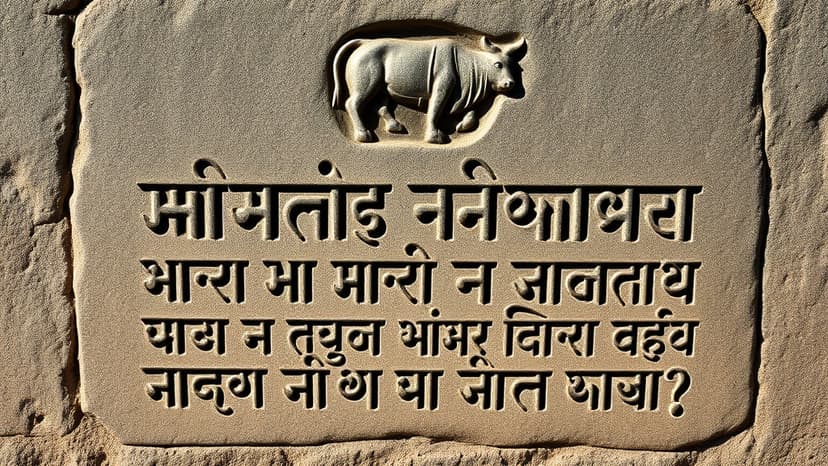
New epigraphical evidence uncovered by the Archaeological Survey of India (ASI) has dramatically reshaped the historical understanding of Telangana's prominent Bonalu festival. Previously believed to have originated in the early 19th century, linked to a plague-induced vow, the festival's roots have now been traced back to 1516 CE, during the reign of Vijayanagara ruler Krishnadevaraya. This significant finding redefines the cultural timeline of this cherished celebration.
The pivotal discovery is a Telugu inscription, dated May 4, 1516 CE, which explicitly records the Bonalu festival and related folk rituals. This ancient text details tax exemptions for practices such as Rangam and Bonalu, and documents land grants to facilitate these celebrations. Notably, the inscription suggests these rituals were already well-established practices prior to its creation, underscoring their deep historical significance.
This revelation not only alters the perceived age of Bonalu but also emphasizes the remarkable resilience and continuity of Telangana's folk traditions. Rituals like Bonalu, Rangam, and Kunamuggu have persisted through centuries of political changes and shifting societal landscapes, continuing to thrive in the region's contemporary cultural fabric.